SSI Open Water Diver Course in Andaman — Certified to Dive Anywhere in the World
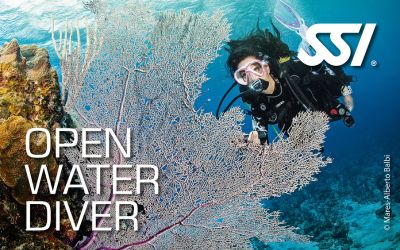
You don't need to be a strong swimmer to become a certified Open Water Diver. This 4-day SSI course takes complete beginners — with zero diving experience — to an internationally recognized certification level that lets you dive independently, anywhere in the world, to 18 metres.
I've spent over a decade instructing novice students through exactly this course on Havelock Island — building their confidence through repetitive skills practice in-water, diving parallelly to fix their fin technique, and working on their buoyancy over the sandy bottom, until diving feels completely natural to them. Read on for exactly how the four days run, what it costs, and what you'll need before you begin.
What Your Open Water Certification Unlocks!
This certification prepares you to plan and execute an open water dive safely with a buddy (Open Water Diver certified or above), opens the door to explore the other 70% of our planet, and qualifies you to enroll in other advanced-level courses.
It makes you happy, confident, and respectful of marine life — you'll come to realise that we share this planet with countless other species every day. You walk away with real diving ability, well-controlled decision-making, world wide valid certification, and a heart full of memories.
The Cost, Inclusions, and Exclusions of Your Open Water Diver Course
The SSI Open Water Diver Course costs Rs. 25,000 + 18% GST, covering your 4 mandatory open water dives — there's no other hidden cost. If your instructor recommends or you'd like extra dives beyond certification (dives 5 and 6, purely optional), these cost Rs. 2,500–3,500 per dive depending on the site.
Inclusions
- A comprehensive online academic session with 1:1 Q&A support to build your knowledge of scuba diving and marine life
- All 20 underwater skills, practiced across 3 days to enhance your scuba diving ability
- 4 tailor-made open water dives across 4 days, to build your buoyancy, confidence, and comfort underwater
- Equipment rental, instructor fees, study materials, and certification charges
- Pickup and drop-off within 5km (between Govind Nagar and Vijay Nagar Beach) in Havelock Island
- Water and light snacks
Exclusions
- Transportation such as flight or ferry tickets
- Food and accommodation (hotel rooms and meals aren't included)
- Sightseeing trips and private speedboat transfers
- Extra dives or snorkelling trips requested without prior payment
Things to Carry
- Swimming costume, rash guard, leggings
- Sunscreen, a beach towel, and a dry bag
- Your own mask and snorkel if you have one (we provide these too, but your own usually fits better)
- A medical fitness certificate, if you're above 49 or on daily prescription medicine
Prerequisites & Eligibility
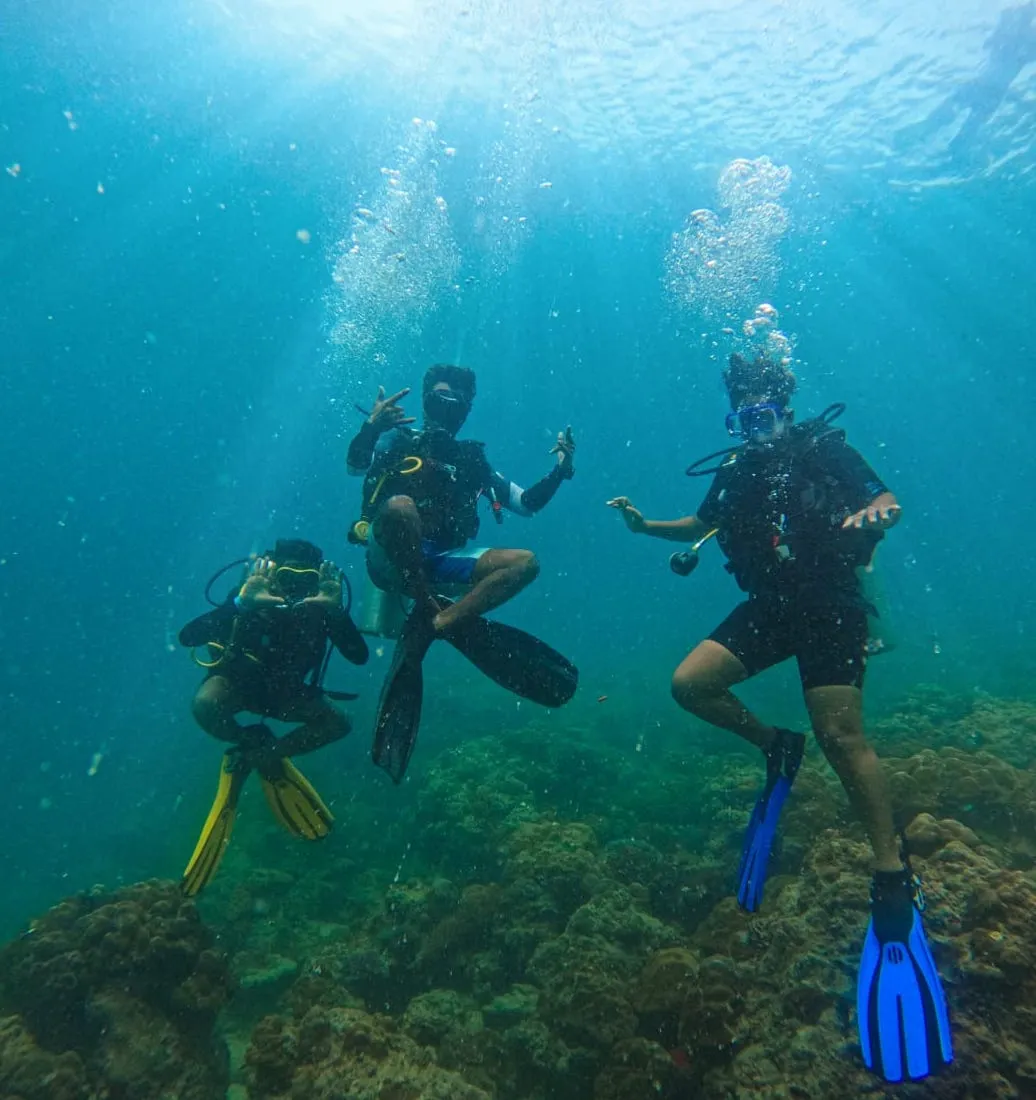
You'll need to complete a 200m swim, a 400m snorkel, and a 4-minute float at the surface before the course begins — we break the 200m swim into 5 stretches of 40m in chest-deep water, so it's achievable even if you're not a strong swimmer. Your instructor demonstrates fin technique, and using mask-snorkel before the snorkel test, so you'll know exactly what to do. Do not worry much, making mistakes are the only way to learn new things.
The minimum age is 10, with no upper limit — as long as you're medically and physically fit to dive. Please review our medical questionnaire form before booking, especially if you have any pre-existing health conditions.
How the Course Runs, Day by Day
You can study online using the SSI app, once we assign you the Open Water Diving course. We recommend everyone complete their academic knowledge review questions from the comfort of their home — this way, you can save time and visit other tourist attractions on Havelock Island.
Day One
Meet & Greet
- Pick up from your hotel at 8:30 AM
- Finishing the paperwork required for the course
- Discussion of academic theory
- Equipment sorting as per your size
- Short discussion about the swim, snorkelling, and float test
- Heading to the beach at 11 AM
On the Beach & In-Water
- Getting into chest-deep water for a 200m swim, 400m snorkelling, and a 3-minute float test at 11:15 AM
- Snacks break at 12:30 PM
- Learning to use scuba equipment on the beach — assembling and disassembling the equipment, following the checklist to prepare the gear safely, and tips and tricks to use it efficiently
- Briefing about the skills — why they matter, how an instructor demonstrates them, and how you'll need to perform them
- Debriefing of the session, and drop-off at the hotel at 2:30 PM
In-water skills practice starts at 1 PM:
Day Two
Skills Learning
- Pick up from your hotel at 8:30 AM
- Change into our 2mm wetsuit, and head to the beach at 9 AM
- Short skills briefing, then getting into chest-deep water to practice them at 9:30 AM
- We revise the previous day's skills first, then move to the fresh ones
- Snacks break at 12 PM, including debriefing of the skills
In-water skills practice starts at 9:30 AM:
1st Open Water Dive of the Course
- Our speed boat takes you in, and the crew walk you through the use of safety equipment at 12:15 PM
- On the way to the dive site, discussing topography and marine animal sightings
- First dive at the chosen dive site, from around 12:45 PM to 2 PM
- A detailed debriefing about the skills and the first dive session
- Drop-off at the hotel by 3 PM, after learning about equipment maintenance
Day Three
Remaining Skills
- Pick up from your hotel at 8:30 AM
- Sorting out equipment and heading to the beach at 9 AM
- Short skills briefing, then getting into chest-deep water to practice at 9:30 AM
- We revise the previous day's skills first, then move to the fresh ones
- Snacks break at 12 PM, including debriefing of the skills
In-water skills practice starts at 9:30 AM:
2nd Open Water Dive of the Course
- Our boat crew repeats the safety-equipment briefing at 12:15 PM
- On the way to the dive site, planning the dive and discussing entry, exit, and emergency procedures
- Second dive at the chosen dive site, from around 12:30 PM to 1:30 PM
- A detailed debriefing about the skills and the second dive session
- Drop-off at the hotel by 2:30 PM, after washing your equipment with fresh water
Day Four
No Skill Day
- Pick up from your hotel at 8:30 AM
- Change into our 2mm wetsuit, and head to the beach at 9 AM
- Morning briefing on how you'll dive — dive planning, buddy system, entries and exits, and a recap of the previous day's skills
- Head to the beach and board the boat at 9:30 AM, meeting the boat crew again — they help you get in and out of the boat the most
- Setting up your dive buddy, reminding each other about the safety stop at 5 metres for 3 minutes, and performing the pre-dive safety checklist on the way to the site
- Back-roll entry into the blue for a quality, peaceful dive after arriving at the site at 10:30 AM
- Snacks break and surface interval at 11:30 AM, including debriefing of the third dive — what you did best, and what needs polishing
Fun Dive
- Fourth dive at another coral reef at 12:20 PM, to a depth of 18 metres
- Learning to read the dive computer, checking your buddy's air consumption and your own during the dive
- Enjoying every bit of it, and making memories with the GoPro 12 camera
- Taking a proper safety stop with your buddy at 5 metres for 3 minutes at the end of the dive
- Debriefing, and back to the hotel at 2 PM
- If time allows, a few more dives (optional dives 5 and 6) are recommended to sharpen your dive ability
- You'll need to come to our office at 6 PM on the fourth day for the final exam and dive logging — your instructor certifies you as an Open Water Diver as soon as you score 75%
Congratulations, and welcome to the divers' community — with access to the other 70% of our world.
Ready to Go Further?
Your Open Water certification opens the door for underwater adventure — it's the foundation for everything that comes next. If you want to dive deeper and build advanced skills, our Advanced Open Water Diver course is the natural next step. You can also extend your diving skills in something specific instead — wrecks, night dives, deep diving. Check out our specialty courses.
What Our Divers Say

"Did my Open Water Certification course here. Absolutely amazing experience. Mr. Nabin was so patient with me from the very beginning and made sure I understand and correct every error. He made sure that we learn all essential skills beforehand so that we can enjoy the dives ahead. They were also very flexible with our schedule and made sure all dives align with the same. The dive sites were beautiful and we could spot so many fishes and corals. Overall a great experience. Would highly recommend to undergo the professional courses here"
"What a great experience it was. Mr. Nabin Bhusal has been such a phenomenal mentor. I enrolled for my open water diver course, throughout the course I was provided a pickup and drop service. Best Dive shop to complete your Open water course with knowledgeable and helpful staff throughout. They know some very great locations for dive spots and are very humble and professional. 4-day course went soo smoothly without any complications especially with great mentorship and support."
"Did there my Open Water dive course, the staff has great english and high level nee equipment! Highly recomended. I did a first star diving course there which included 6 dives and it was excellent the instructors speak high level english and the equipment is maintained and modern. Dives with a boat in different sites full of fish, octopus, sting ray, clown fish (Nemo) and more. Highly recommend"
"I came across this dive center thanks to its positive google ratings and booked my scuba open water certification course with them. As someone who was initially scared to even swim in ocean water, the trainers were so understanding and accommodating. My first scuba experience was amazing thanks to them. Cheers to Deb and Dolma for this."
"Did my Open Water course with Seahawks at Havelock Island and it was honestly one of the best decisions of my trip. The entire team was professional, patient, and made everything feel very safe and well organized from day one. A special shoutout to my instructor, Nabin Bhusal — he was amazing. Super calm, very clear with instructions, and made learning so much fun. He kept the vibe light but was always focused on safety. I felt completely comfortable underwater because of him. If you're planning to do your Open Water in Havelock, I'd definitely recommend Seahawks. Great people, great experience, and memories for life."
"I did my Open Water Diver course with Seahawks Scuba and had a really good experience. The instructor Nabin was patient, clear with their explanations, and made sure I was comfortable at every step — even when I was nervous. They focused on safety without making it stressful, and I genuinely felt I was learning, not just being rushed through the course. Highly recommend Seahawks Scuba to anyone starting their diving journey!"
"I did my Open Water Diver certification with Seahawks and it was AMAZING! They were very professional, took us through the training phase in a thorough manner, and were very patient about my comfort level. We did a total of 4 dives. Our instructors, Nabin and Dolma, made the whole experience feel smooth and enriching! Not only did they make sure that we see beautiful marine life but that we feel more confident with our diving skills. The entire Seahawks team (other instructors, underwater photographers, drivers, and the owner Deb) made this is a 11/10 experience!! Would definitely recommend doing OWD with them."
"I went to them for my Open Water cert, highly recommended! Joel was an amazing instructor, thoroughly enjoyed my dives with him. Cheers! :)"
"Had a wonderful time learning with SeaHawks and the entire team during our open water course. Everyone was truly professional especially Joel. Just one recommendation though, while we did go through the theory on our one a session or two covering the main parts would have helped. Wish you the very best👍"
"Hi, done open water Dive course in Feb 26. My Instructor was Mr Navin who is excellent. They understand student very well and guide you accordingly. Worth a place to get your open water diver certificate through them."
"This was my second certification with Seahawks Scuba, Havelock and for obvious reasons. They are amazing bunch of professionals and they accommodate according to your schedule. They handled my 13yo with utmost care to complete his Junior OWD course. Happy with their service and I highly recommend them."
4.9 · 1,672 Google Reviews — Read All Reviews
FAQs
The SSI Open Water Diver course takes 4 days.
The SSI Open Water Diver course costs Rs. 25,000 + 18% GST.
Scuba diving courses are suitable from age 10 upward, with no upper age limit, as long as you're mentally and physically fit to dive. Please download the medical questionnaire form here.
You can take a scuba diving course if you don't have a medical condition such as a heart-related problem, a respiratory-related problem, a blood pressure-related problem, asthma, depression, or any type of surgery within 6 months. Please download the medical questionnaire form here.
After completing the SSI Open Water Diver course, you can dive to 18 metres with a buddy who is also a certified Open Water Diver.
The best scuba diving practice recommendation is always to dive with a buddy. Yes, you can dive alone, but that isn't 100% safe for you.
There are multiple brands, such as SSI (Scuba Schools International) and PADI (Professional Association of Dive Instructors). Yes, scuba diving certifications are recognized worldwide.
Yes, you can — we have scuba diving masks perfectly fitted with prescription lenses, such as -2, -3, -4, -5, -6, -7.
We don't consider marine animals a threat. But unplanned dives, aggressive behaviour toward marine animals, and not following safe diving standards can lead to dangerous conditions. Remember: safety first, protection must — plan your dive, dive your plan.
Once you're certified, your SSI certification remains valid for a lifetime. However, if you don't scuba dive for six months in a row, you should opt for a scuba skill update program at your nearest SSI scuba diving center.
Explore the Dive Sites
Once you're certified, here's where your Open Water certification (18m, with a buddy) takes you:
Open Water Diver Sites
For When You Go Further (Advanced Open Water)
Ready to Get Certified as an Open Water Diver?
Spend 4 days on Havelock Island and walk away with a certification that opens the door to diving anywhere in the world. Book your SSI Open Water Diver Course today, or reach out on WhatsApp if you have questions first.