Everything You Should Know About Scuba Diving in Andaman Islands — A Complete Guide for 2026
I've been scuba diving in Andaman Islands since 2007 — back when the islands were just beginning to draw attention after the 2004 tsunami, and only a handful of dive centers existed here.
Nineteen years on, I've watched this place grow into one of Asia's most respected diving destinations, exploring new dive sites, training and certifying over 10,000 divers along the way.
I'm Debal Das, SSI Instructor Pro #65686, and this isn't a blog stitched together from research — it's the complete guide to scuba diving across all of Andaman, built on two decades of underwater experience: best time to dive, where to go, real costs, and how to choose the right dive operator.


What is Scuba Diving?
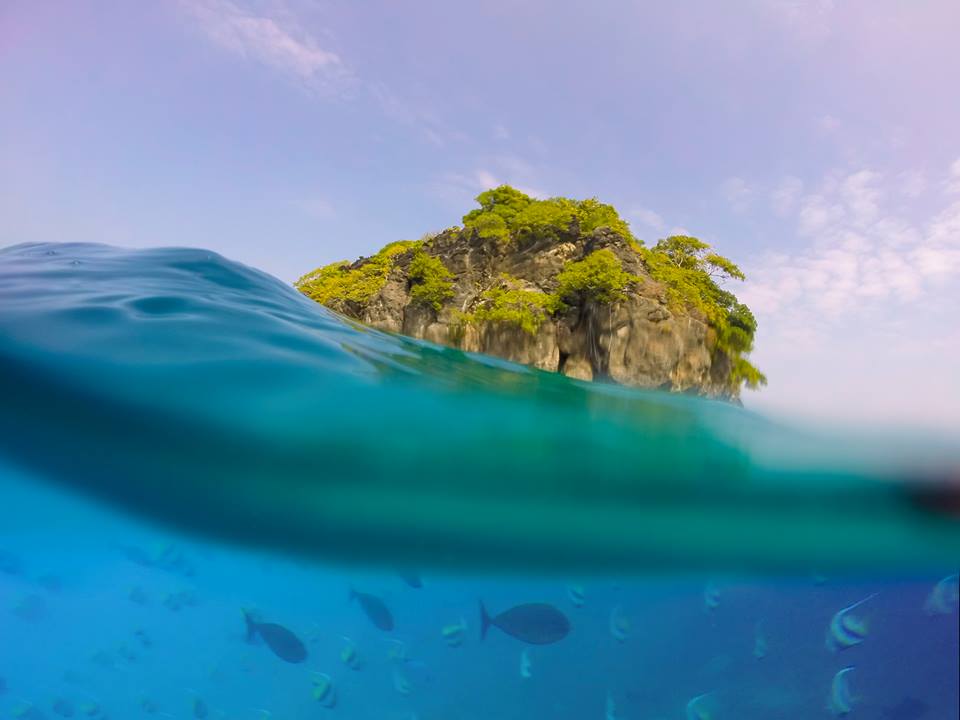
The name "SCUBA" is an acronym for self-contained underwater breathing apparatus. It allows you to feel like you have gills, just like a fish.
No experience or swimming ability is required to try scuba diving with a certified instructor guiding you — I've seen most people breathing comfortably underwater within minutes. A typical first dive stays shallow — around 10 to 12 metres — and lasts 30 to 50 minutes, plenty of time to get comfortable and still see plenty of marine life.
I've introduced thousands of complete beginners and non-swimmers — including many who were extremely water-phobic and had never swum a stroke in their life — to that first breath underwater.
How is the Scuba Diving Experience in Andaman?
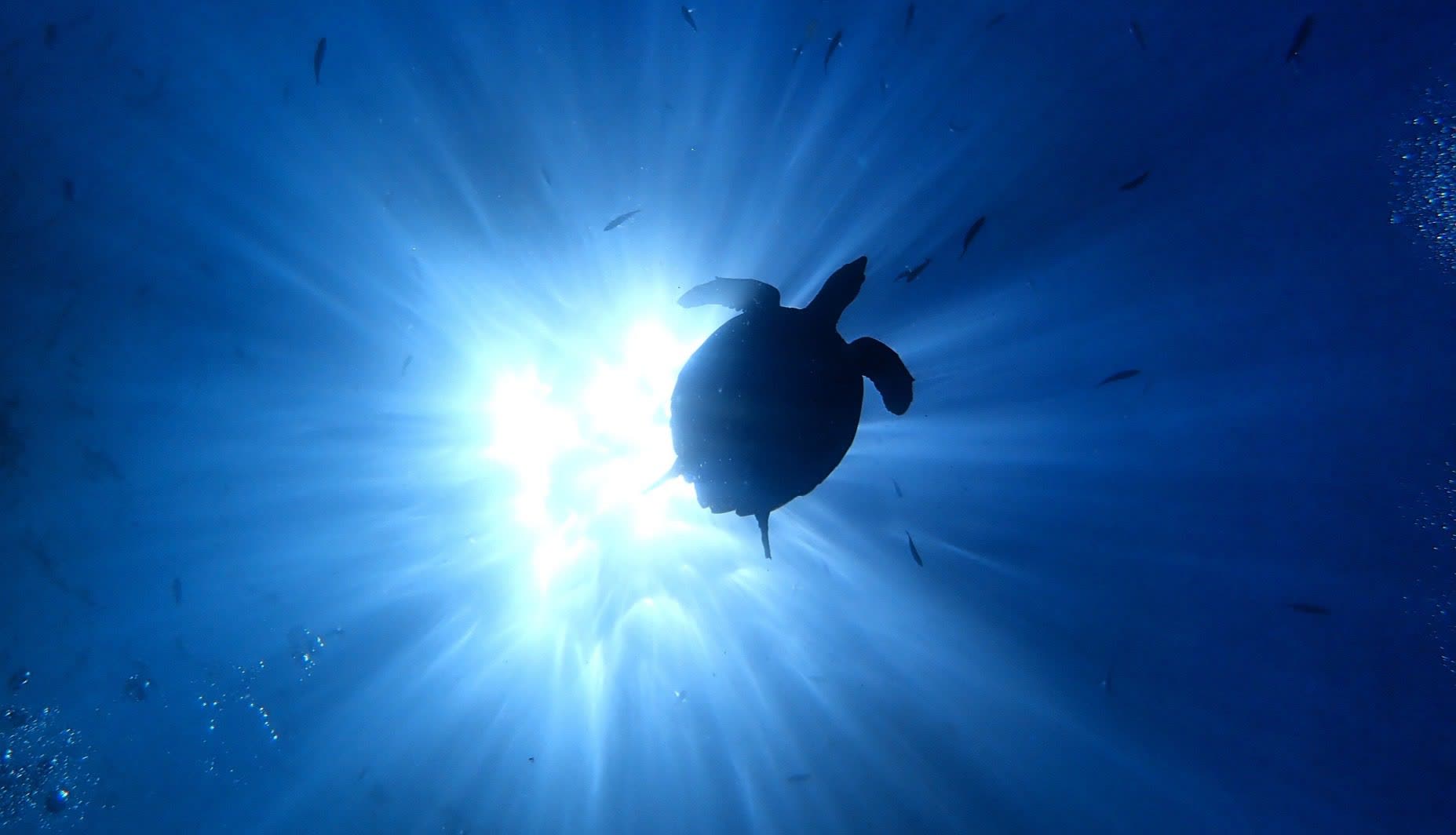
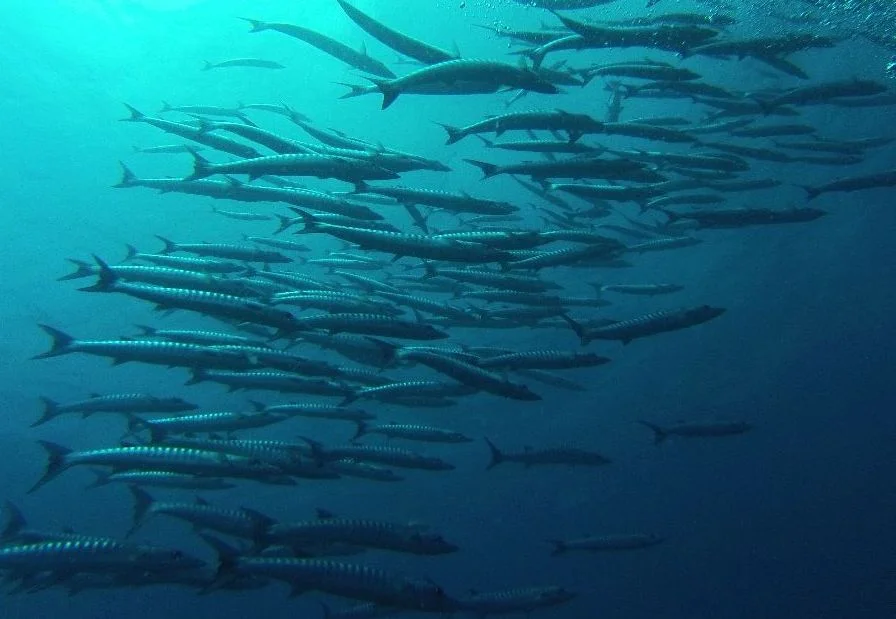
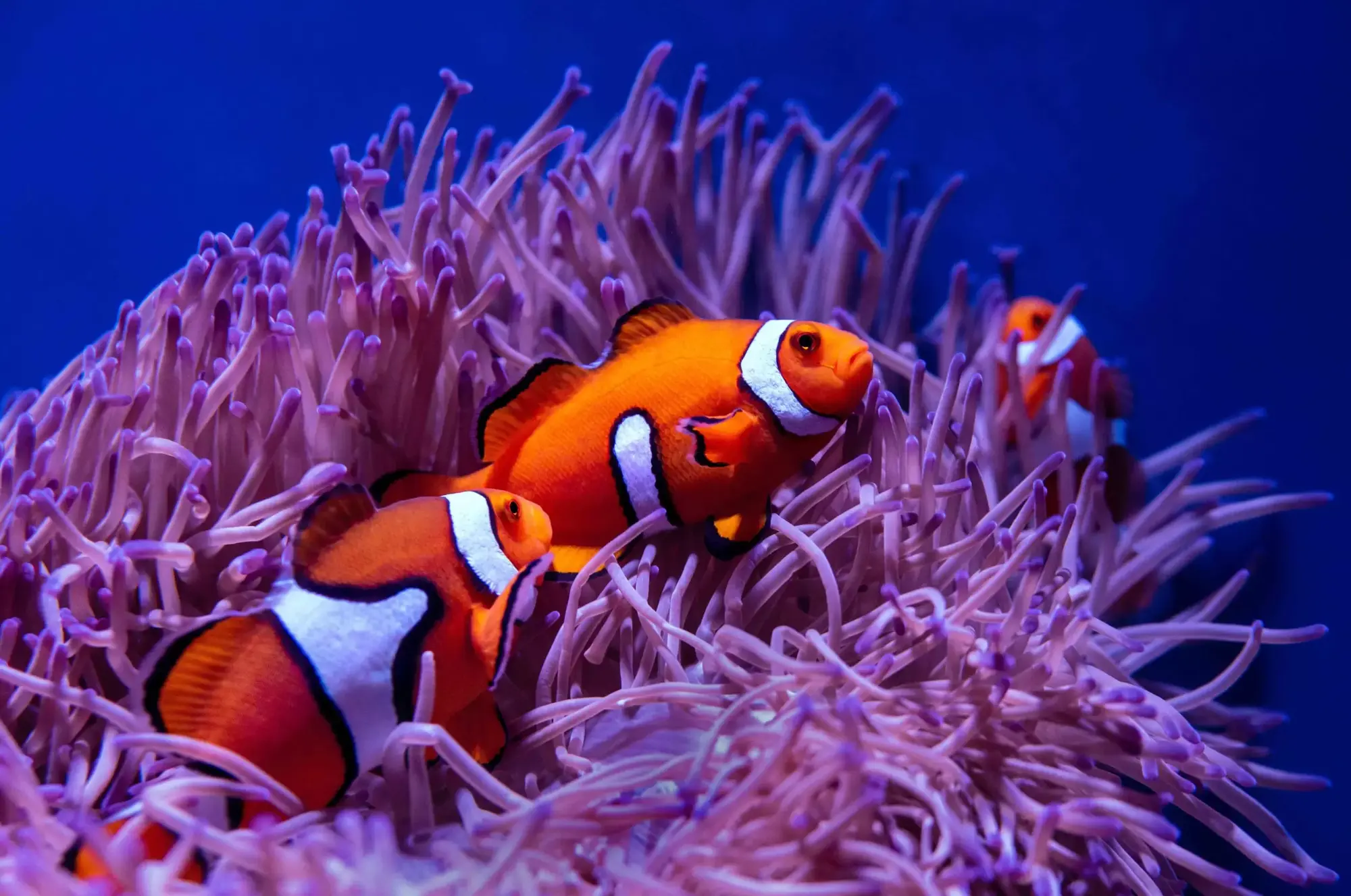
Diving in Andaman feels different from most places. One minute you're encircled by a school of yellow snappers, another minute you're right over a garden of colourful corals, and then suddenly you're facing a defensive family of clownfish protecting their anemones. A hawksbill turtle rests right beside the anemones on quieter days, and on the boat ride out, you might even spot dolphins.
Andaman's waters stay warm year-round — anywhere from 25 to 30°C depending on the season — so a thin wetsuit or even just a rash guard is usually enough. Visibility shifts with the season too, from around 6 metres on the cloudiest monsoon days up to 25 metres at its clearest — and even on a quieter day, there's still plenty to see.
I've been part of this experience for thousands of divers, whether it's their first time or their hundredth. Watching them dance and pose for the camera underwater, eyes crinkled in a smile you can see even through the mask the second they realise they're breathing normally several metres below the surface, surrounded by colourful schools of fish — that's the moment I love most about this job, and it never gets old.
Types of Experiences
People who try it often describe their first scuba dive as a life-changing experience — thrilling and surprisingly comfortable at once. This fully assisted, one-on-one programme is designed for complete beginners and non-swimmers alike; your instructor handles everything, so you're free to glide through schools of fish on your very first breath underwater.
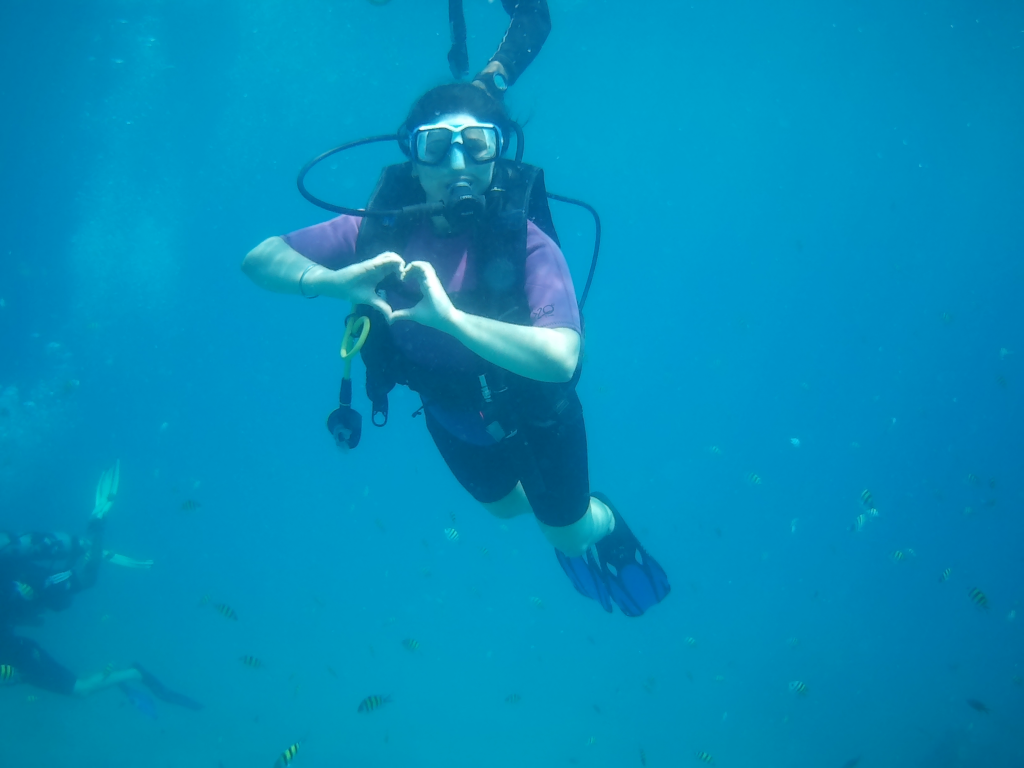
One-Time Experience
Fully assisted, one-on-one. No swimming ability or experience needed — your instructor handles everything.
Read more →
Certification Courses
From Scuba Diver to Open Water to Advanced Open Water Diver — become a confident, independent diver.
Read more →
Specialty Courses
Sharpen buoyancy, go deeper, try underwater photography, or get comfortable with drift diving.
Read more →
Fun Dives
Skip the skills training and just dive — explore Andaman's reefs at your own pace with a divemaster.
Read more →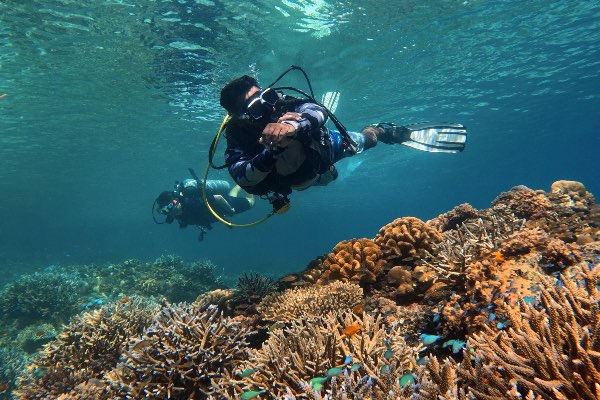
Circumstances to Consider for Best Scuba in Andaman
Beneath the surface, sunshine or rain matters far less than what's happening to the sea itself — thunderstorms and a choppy surface are what actually affect a dive. Beyond weather, here are a few other factors that shape a safe, beginner-friendly dive in Andaman.
1. Depth Limitation for Beginners
The Andaman & Nicobar Tourism Department officially caps introductory dives at 12 metres for all registered dive centres. SSI's general standard allows up to a 4:1 student-to-instructor ratio, but at Seahawks, we keep beginners and non-swimmers at a stricter 1:1 ratio as our own safety practice.
Dive sites deeper than 12 metres are not suitable for beginners looking for a one-time scuba experience. We have plenty of beautiful dive sites within a 12-metre depth range. Certified divers can dive up to 18–30 metres, depending on their certification level and skills. They explore further and deeper sites for bigger adventure.
2. Currents and Site Selection
Ocean currents shift direction with the tide, ranging from mild to strong — dive sites with strong currents aren't suitable for beginners or non-swimmers, though certified divers know how to handle them. For this reason, beginners are never taken to far-off sites like The Wall, SS Inchkeith, Pilot Reef, Jackson Bar, Dixon's Pinnacles, and Slope, where choppy seas and strong currents are common. Beginners always dive at closer, calmer sites instead, while experienced and certified divers are welcome at the further ones.
3. Weather and Seasonal Visibility
Andaman's tropical climate can shift quickly, sometimes disrupting the boat journey to farther dive sites with little warning. Visibility is also seasonal — it can drop temporarily after a week of heavy rain or in choppy seas, most noticeably during the monsoon months of June to September. Planning around these months, where possible, makes for a smoother first dive.
4. Coral Reefs and Marine Life
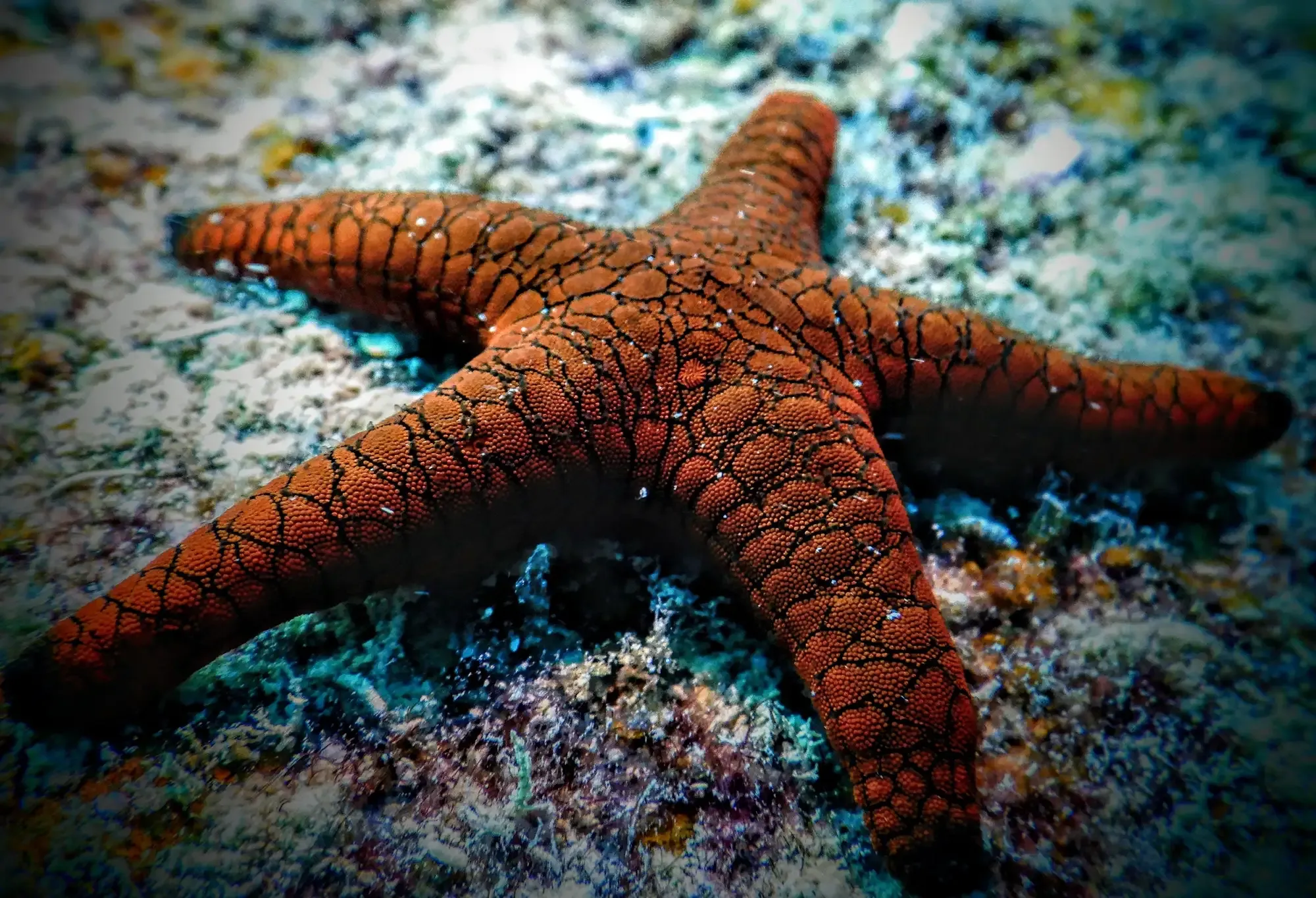
One can easily spot schools of yellow, red, and two-spot snappers, barracudas, and fusiliers weaving through healthy, colourful coral during a first scuba experience at sites such as Tribe Gate, Turtle Beach, Light House, Purple Haze, and Juvis. I've also spotted turtles, lobsters, blue starfish, stingrays, and occasionally a leopard shark at these sites.
5. Choosing the Right Dive Operator
Dive centres in Andaman vary in how they're run. Some are founded and led by instructors who put the diver's experience and safety first, while others operate more like high-volume businesses at a slightly lower price, where the focus can shift toward numbers over individual attention. Neither approach is necessarily wrong, but it's worth knowing which one you're booking into. A few simple checks help: who actually owns and runs the centre, what the instructor-to-student ratio is, whether the certification is SSI or PADI recognized, and what recent reviews say about the actual experience.
6. Overcoming Nerves, Not Just Conditions
In my experience, it's rarely the weather, current, or depth that actually unsettles a beginner — it's their own thoughts. Most people expect rain or wind to be the problem, but it's almost always overthinking and anxiety that throw off a first-timer's confidence underwater. The water is usually far calmer than the mind.
Why Choose Andaman for Scuba Diving?
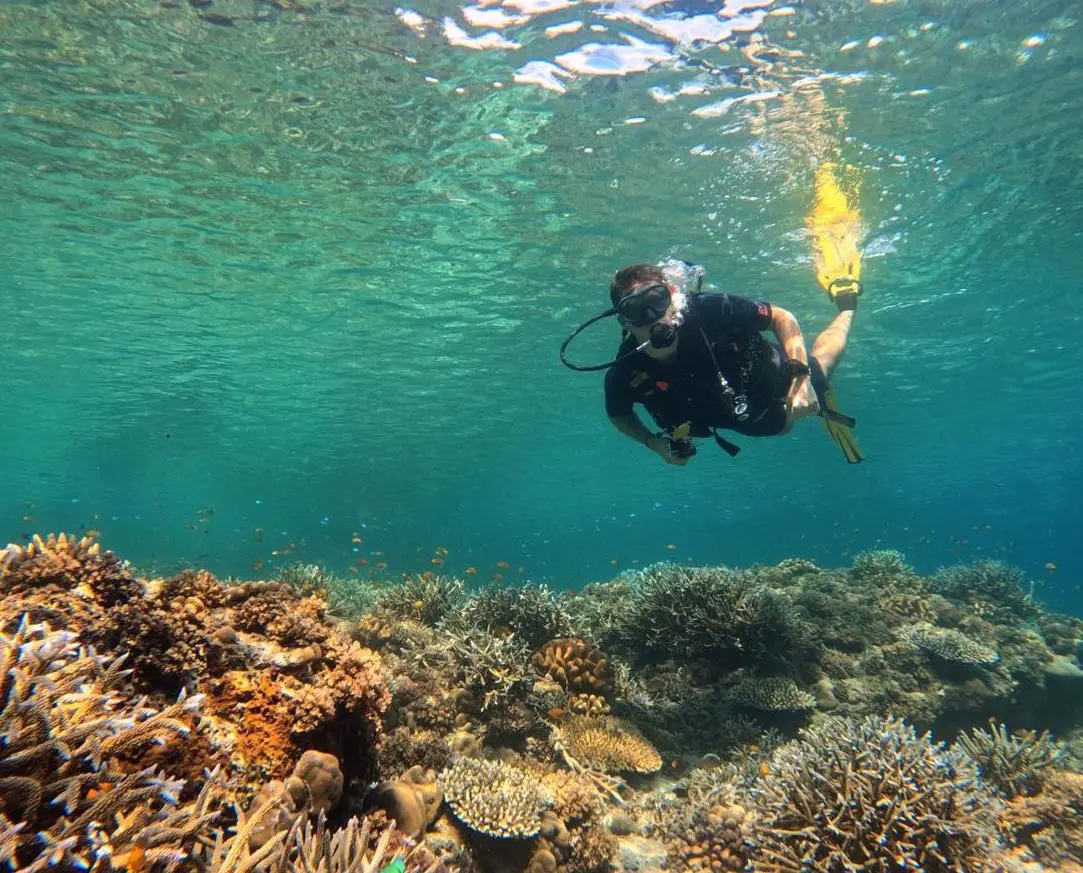
Andaman's reefs haven't escaped climate change. Havelock itself lost a significant share of its live coral during a major bleaching event in 2010. But not all corals responded the same way — hardier species like boulder and Porites corals proved far more resilient, recovering steadily where more delicate types struggled. That resilience has had real protection behind it too: fishing vessels are legally banned from operating in coral reef areas across Andaman, sparing these reefs the damage busier commercial fishing grounds face elsewhere.
That recovery and protection are visible on almost every dive today. In my nineteen years here, I've watched many of the sites I dive regularly go from damaged to genuinely vibrant again, with healthy coral cover and dense fish populations — real proof that reefs can bounce back when given the chance. Large schools of fusiliers, bluefin trevallies, and barracudas are common here, often numbering in the hundreds rather than the odd fish here and there. At our more distant dive sites, sharks and turtles are sighted almost every day, and manta rays show up regularly too — usually around seven times a month.
That same care extends to how we teach. Supervision ratios shift with experience level: personal instructors for beginners and non-swimmers, 1:2 for certification courses, and 1:4 for certified fun divers. Beyond Try Scuba, Open Water Diver, and Advanced Open Water Diver courses, we also teach six specialty courses, and our instructors teach across English, Hindi, Tamil, Bengali, Malayalam, and Nepali — so language is rarely a barrier here.
We also make it easy to build diving into a full island vacation. With three speed boats, we run a weekly rotation covering almost every dive site around Havelock, so returning divers get a different experience each day. We can also help arrange accommodation — including booking Green Imperial Resort on request — along with ferry tickets and cabs, so all you need to plan is your next dive.
Which Island is Best for Scuba Diving?
I've lived and dived at Havelock, Neil Island, Port Blair, and Chidiya Tapu over the years — in my early days here, I'd move between the islands season by season to avoid the monotony. People often ask me which one is actually worth their time, so here's an honest comparison, based on real experience, not just research.
| Criteria | Havelock | Neil | Port Blair | Chidiya Tapu |
|---|---|---|---|---|
| Beginner Suitability | ||||
| Site Variety | ||||
| Water Clarity | ||||
| Marine Life | ||||
| Resources / Luxury | ||||
| Accessibility | ||||
| Pricing | ||||
| Instructors | ||||
| Popularity |
Havelock comes out ahead across almost every measure — the widest range of dive sites, the clearest water, the most marine life, and the most beginner-friendly options, with calm conditions ideal for first-timers and non-swimmers. Neil Island comes closest on nature-based factors like visibility and sightings, while Port Blair offers decent calm-bay sites for beginners and has the edge on accommodation and transport simply by being the main gateway into the islands. Chidiya Tapu, by contrast, suits experienced divers far more than first-timers, though it surprisingly beats Port Blair on water clarity and marine life.
For nearly every diver — beginner or experienced — scuba diving in Havelock Island remains the strongest choice in Andaman. It's also earned a strong reputation within the wider diving community itself, with instructors and divers elsewhere often speaking highly of it.
Who Can Participate? Age & Medical Requirements
Scuba diving is more accessible than most people expect — you don't need to be an “adrenaline junkie” or even a confident swimmer to try it. Modern equipment and trained instructor supervision make it a genuinely safe sport across a wide range of physical abilities.
Before booking anywhere in Andaman, it's worth understanding how dive centres are classified. The Andaman & Nicobar Tourism Department splits every registered centre into two categories. Category A centres are affiliated with WRSTC member agencies — SSI, PADI, NAUI, BSAC — and follow that agency's own international training and safety standards. Category B centres follow NIWS (National Institute of Water Sports, Goa) standards instead, with a fixed government age limit of 12 to 60 years. Knowing an operator's category tells you a lot about whose rulebook they're actually diving by.
Seahawks SCUBA is a Category A centre, certified under SSI — which is why our age policy differs from the Category B norm. Our minimum age is 10 years, set under SSI's international standards rather than Category B's 12-year minimum; younger divers dive with an extra layer of care and safety — shallow, closely supervised sessions — since a child's organs and ear structures are still developing. We also have no fixed maximum age — SSI and WRSTC set no upper limit at all, unlike Category B's 60-year cap.
What actually matters more than age is health. Divers over 45 complete a more detailed medical questionnaire covering smoking, blood pressure, cholesterol, and family heart history — a physician's sign-off is only required if any of those apply.
Certain conditions call for extra caution regardless of age, including uncontrolled asthma, heart disease, recent surgery, epilepsy, and pregnancy. If you're managing any ongoing health condition, a quick chat with your doctor before booking is always the safer move.
Cost of Scuba Diving in Andaman
Scuba diving in Andaman costs anywhere from ₹2,500 for a one-time shore dive to ₹29,000 for a full Open Water Diver certification, with the price shaped almost entirely by which experience you choose and how much time it includes underwater.
| Experience Type | Price (₹) | Duration | Underwater Time | Includes |
|---|---|---|---|---|
| One-time — shore dive | 2,500–3,500 | 2 hrs | 20–30 min | Photos & videos |
| One-time — boat dive | 3,500–6,500 | 3–5 hrs | 20–50 min | GoPro photos & videos |
| Scuba Diver course | 16,000–18,000 | 2 days | 2 × 30–45 min | GoPro photos & videos |
| Open Water Diver course | 25,000–29,000 | 4 days | 4–6 × 30–45 min | GoPro photos & videos |
| Advanced Open Water course | 24,000–28,000 | 3 days | 5 × 30–45 min, 5 specialties | GoPro photos & videos |
| Specialty course | 10,000–16,000 | 1–3 days | 2–3 × 30–45 min | GoPro photos & videos |
| Fun dive (certified) | 2,500–4,000 | 2–3 hrs | 1 × 30–45 min | No photos/videos |
What affects the price
A few factors move these numbers up or down. Shore dives sit at the lower end since they need less boat time and crew; boat dives cost more but reach farther, often better, sites. Course pricing scales with what's actually included — more skills sessions, more open water dives, and more days in the water naturally cost more, which is why the Open Water Diver course (4 days, 4–6 dives) sits above the Scuba Diver course (2 days, 2 dives). Pricing can also shift slightly during peak season.
And as covered earlier, the centre you choose matters just as much as the activity. In nineteen years here, I've seen how a noticeably cheap price almost always means something's been cut to get there — I've come across operators skipping regular air compressor filter changes to save on running costs, or keeping equipment in service well past when it should have been retired. Sometimes it's the dive time itself that gets quietly shortened, so more divers can be pushed through in a day. None of that shows up on a price list. You only find out once you're in the water.
Best Time and Season
Andaman doesn't really have a "bad" time to dive. The biggest myth is that rain ruins diving — it doesn't. Being a tropical rainforest zone, Andaman sees rain roughly ten months a year, but that happens at the surface; it doesn't affect underwater visibility or marine life. Even on the worst days, visibility holds at 6–10 metres — plenty to see everything clearly.
What actually shapes diving conditions here is wind speed and direction — a choppy surface and temporarily poor visibility come from wind, not rain. From May to September, wind blows south-west to north-east, and blows fairly hard. From October to April, it reverses and blows noticeably gentler, though this window also brings occasional cyclones — one to three a year, riding in from south-east Asian monsoon systems near Indonesia and Thailand. The islands' hills act as a natural windbreak against whichever direction is blowing, sheltering close-by sites on the opposite side — which is why beginners can comfortably dive those sheltered sites year-round.
| Period | Visibility | Water Temp | Conditions |
|---|---|---|---|
| Jan–Apr (Best Months) | 12–25m | 27–30°C | Driest stretch — light rain Jan–Feb, none Mar–Apr |
| May–Jun (Arrival of Monsoon) | 8–15m | 25–29°C | Moderate rain as the south-west wind picks up |
| Jul–Sep (Peak of Monsoon) | 6–12m | 25–27°C | Occasional week-long stretches of continuous, sometimes heavy rain |
| Oct–Dec (Goodbye Monsoon) | 10–20m | 25–29°C | Scattered light rain with low wind speed; occasional cyclone-driven heavy rain is expected |
There's also a slower rhythm beneath the surface. A trawling and shark-fishing closure runs from 15 April to 31 May each year, letting fish stocks recover and breed undisturbed. Small fish from that season start showing up by July; by September, the increase is genuinely noticeable. Divers visiting from September onward aren't just diving into calmer water — they're diving into a busier reef with denser marine life.
My recommendation, after nineteen years of this
If you're a complete beginner, come whenever suits you. We take you to close, sheltered sites regardless of season, and even our "bad" 6–10m visibility days are clear enough to see everything you came to see.
If you're booking a multi-day course, I'd point you toward October, or December through April — but not November, when one to three cyclones typically pass through. I've seen what it does to a student on a tight schedule to have a course interrupted halfway by a storm, and I'd rather that never happen to you.
If you're an experienced diver chasing the best visibility and conditions to reach our farther sites, January to April is the best window. By May, the south-west wind starts making the sea choppy — often rough enough that we abort the boat journey before reaching the site. October to December bring the same problem from the other direction.
The biggest advantage of the January–April window is the guaranteed reach to our farther dive sites, where sharks and bigger fish are more likely. Adult turtles are also regularly in the water through this stretch, since turtles nest on Andaman's beaches from December through April — one more reason it rewards divers willing to go further.
Dive Locations Overview
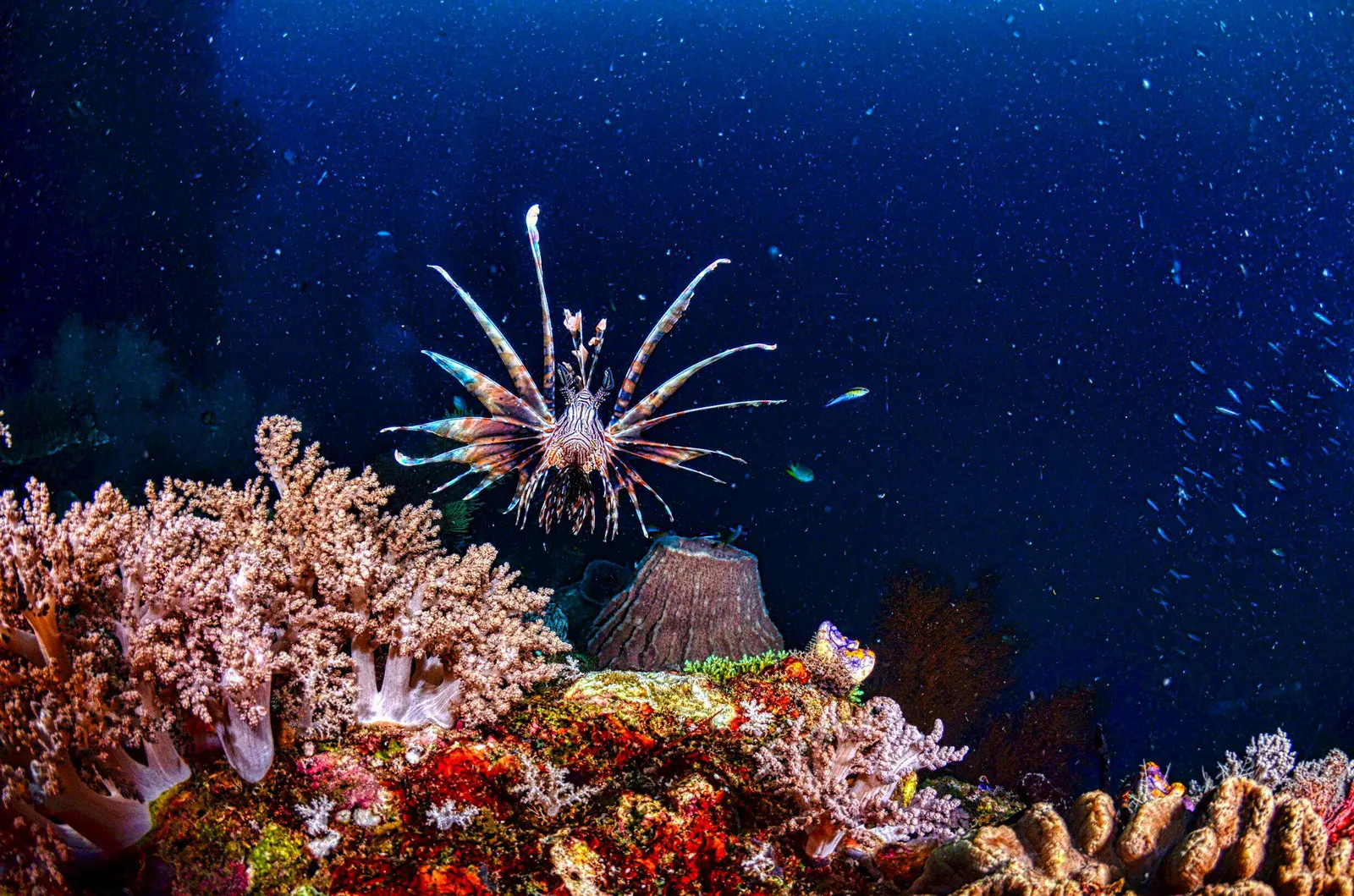
Havelock
18 dive sites from 10–36m. Only Nemo Reef is a shore dive — every other site is reached by boat, 10–50 minutes out.
Explore Havelock dive sites →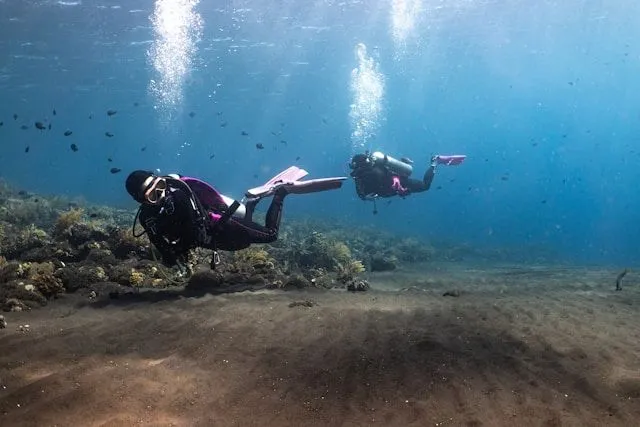
Neil Island
6 dive sites from 12–29m, all by boat. Dugong Dungeon is the standout — even first-timers have a real shot at seeing one.
Explore Neil Island dive sites →
Port Blair
North Bay Island is where diving happens today — a shore dive with calm, approachable conditions for waterphobic beginners.
Explore Port Blair dive sites →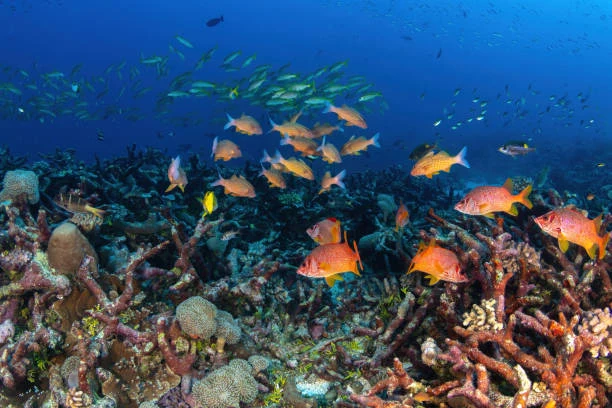
Chidiya Tapu
7 known dive sites, 1 shore dive and 6 boat dive sites. Limited connectivity due to the protected tribal reserve has kept it undeveloped.
Explore Chidiya Tapu dive sites →Frequently Asked Questions
Is scuba diving safe for beginners in Andaman?
Yes, when you dive with a certified instructor under a low diver-to-instructor ratio. Reputable Category A centres pair beginners and non-swimmers with close, often one-to-one supervision — well above SSI's standard 4:1 ratio — which is exactly what makes the activity safe even for complete non-swimmers.
Do I need to know how to swim for a one-time scuba diving experience?
No, swimming ability isn't required for a one-time scuba experience. The programme is specifically designed for non-swimmers and water-phobic beginners, with a certified instructor guiding you throughout and handling the swimming on your behalf, so anyone can comfortably take part.
Do I need to know how to swim for a scuba diving certification course?
Yes — SSI certification courses require a 200-metre swim test and a 400-metre snorkel test as a prerequisite. Any swimming stroke is allowed, and there's no time limit; what matters is finishing comfortably, since this confirms basic water comfort before training begins underwater.
What's the difference between a scuba diving certification course and a one-time scuba experience?
A certification course is a multi-day SSI programme that trains and certifies you as an independent diver, suited to anyone who wants to keep diving long-term. A one-time scuba experience is a single, fully-assisted dive with no certification involved — ideal for beginners or non-swimmers who simply want to try it once.
What is the minimum and maximum age for scuba diving in Andaman?
Age limits vary by dive centre category. SSI/PADI-affiliated Category A centres set their own minimum, often starting around 10, with no fixed maximum age, while Category B centres follow a fixed 12–60 year range under NIWS standards. Divers over 45, at either type, complete a more detailed medical questionnaire rather than face an age cutoff.
Is a scuba diving certification course safe in Andaman?
Yes, when conducted by SSI or PADI-certified instructors following internationally recognised diving standards. Reputable centres in Andaman follow SSI/WRSTC guidelines alongside local A&N Tourism Department regulations, covering instructor ratios, equipment checks, and medical screening. A centre's transparency about its certifications and safety record matters more than the activity itself.
Where do most people dive in Andaman?
Havelock Island sees the most divers in Andaman, thanks to its wide range of dive sites, calm beginner-friendly conditions, and the largest concentration of dive centres anywhere in the islands. North Bay near Port Blair is also popular, mainly for its easy, shore-based access close to the capital.
Which is the best scuba diving operator in Andaman?
There's no single official "best" list, but a few checks tell you a lot: who personally owns and runs the centre, what the instructor-to-student ratio actually is, whether the dive centre is SSI or PADI certified, and what recent, verified reviews say about the real diving experience they have provided — not just the price.