SSI Deep Diving Speciality Course in Andaman - Exploring the Depths
An SSI Deep Diving Speciality course is a set of specialised skills and repetitive practices that helps a diver become confident and comfortable at depths between 18 and 40 metres. It combines academic sessions with open water dives to help you plan and execute smooth, safe deep dive adventures.
Using a compass, dive computer, precise navigation, sharp buoyancy control, and accurate air consumption calculations are all key to getting the most out of your deep dives. I strongly focus on teaching the planning of a dive, and monitor closely that students dive as per the plan. This is what makes a deep dive safe and smooth.


What You Will Learn
During the course, you'll learn deep-diving techniques that sharpen your standard dive practices, and study how diving beyond the advanced level affects the body — including nitrogen narcosis and decompression sickness. SSI Deep Diving also opens up less-frequently-explored dive sites, teaching you the skills to manage these risks across 5 academic sessions and 3 open water dives with an instructor, over a suggested duration of 10–15 hours.
You will walk away mastering multi-level dive planning, safety assessment, and an SSI Deep Diving Speciality certificate to explore the depths worldwide.
Eligibility & Prerequisites
Recreational divers can go as deep as 40 metres, though how deep you go depends on your experience, limitations, and expertise. To join the course, you need to hold an Open Water Diver certification — 8 logged dives beforehand are recommended, though not mandatory — and be at least 15 years old.
Deep diving exposes you to greater pressure than standard diving, which is why the minimum age here is higher than on our other specialty courses. Please check the standard diving medical questionnaire for evaluating your fitness level before you book the course. A current medical fitness certificate is expected if you are 49 years or older.
Key Points of Deep Diving
Dehydration increases your risk of decompression sickness and causes fatigue later on. Limit alcohol and caffeine the day before a deep dive — both increase dehydration risk for hours afterward. Aim to drink around two quarts of water a day to stay properly hydrated.
A proper deep dive plan accounts for gas consumption, breathing rate, equipment selection, buoyancy control, calculated safety stops, and an emergency exit plan.
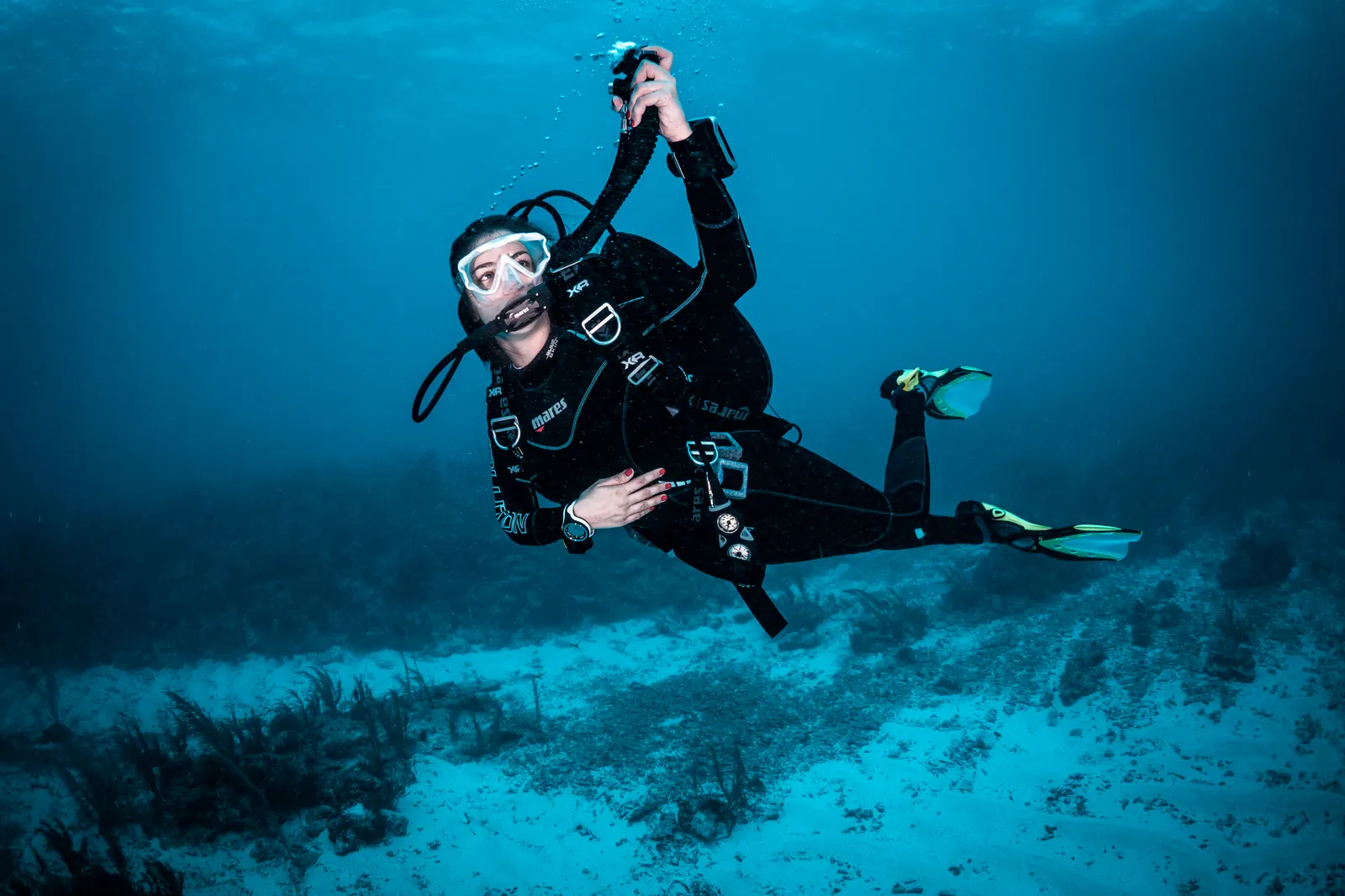
Good coordination with your buddy is essential for a safe dive. Keep an eye on each other throughout, and make sure you're both confident using your alternate air source, BC inflator, and weight release.
Air in your BC and bubbles in your wetsuit compress as you descend, which can cause buoyancy to fluctuate. This can accelerate your descent rate to the point where it's hard to stop at your planned depth — and chasing neutral buoyancy afterward can burn through a lot of air as you inflate and vent your BC.
Breathe slowly and stay relaxed — this matters even more underwater. Air gets denser the deeper you go, so it takes more effort to draw each breath through your regulator. Consciously slowing down your breathing helps you stay calm and in control at depth.
A rushed or poorly controlled ascent is the single biggest risk in deep diving, and it's a leading cause of decompression sickness. As pressure changes on the way up, your buoyancy can shift unexpectedly — throwing off your control, pulling you past your safety stop, and forcing you to breathe harder, which only accelerates the ascent further. To stay in control: use the ascent or anchor line whenever it's available, start venting your BC early instead of waiting for buoyancy to carry you up, and stay calm and neutral as you fin your way to the surface.
Learning to use a redundant gas source is essential for deep divers — it protects against the risk of gas depletion, especially in a situation away from the dive boat with no gas source to fall back on. If gas depletion happens at the bottom, you'd normally need to rely on a buddy with sufficient air to help you ascend safely, which depends entirely on their preparedness. A pony cylinder solves this: a small cylinder carrying enough gas for a safe ascent and safety stop, carried on you and available throughout the dive — making you self-reliant rather than dependent on your buddy's air supply.
Price, Inclusions & Exclusions
The Deep Diving Speciality costs Rs. 18,000, excluding an additional 18% tax. The course runs across 2 days and includes 3 open water dives of 45 minutes each, at depths between 18 and 40 metres. Dives take place at Dickson's Pinnacles and Johnny's Gorge, both reached by boat.
To join, you need to hold an Open Water Diver certification — 8 logged dives beforehand are recommended, though not mandatory — and be at least 15 years old.
- Personal instructor (1:2)
- 3 open water dives (45 min each)
- Boat transport to Dickson's Pinnacles and Johnny's Gorge
- All rental equipment
- Certification fees
- Online study material
- Accommodation and meals
- Personal items like sunscreen or a swimsuit
For full pricing details, see our Rates & Packages page.
Possible Risks of Deep Diving
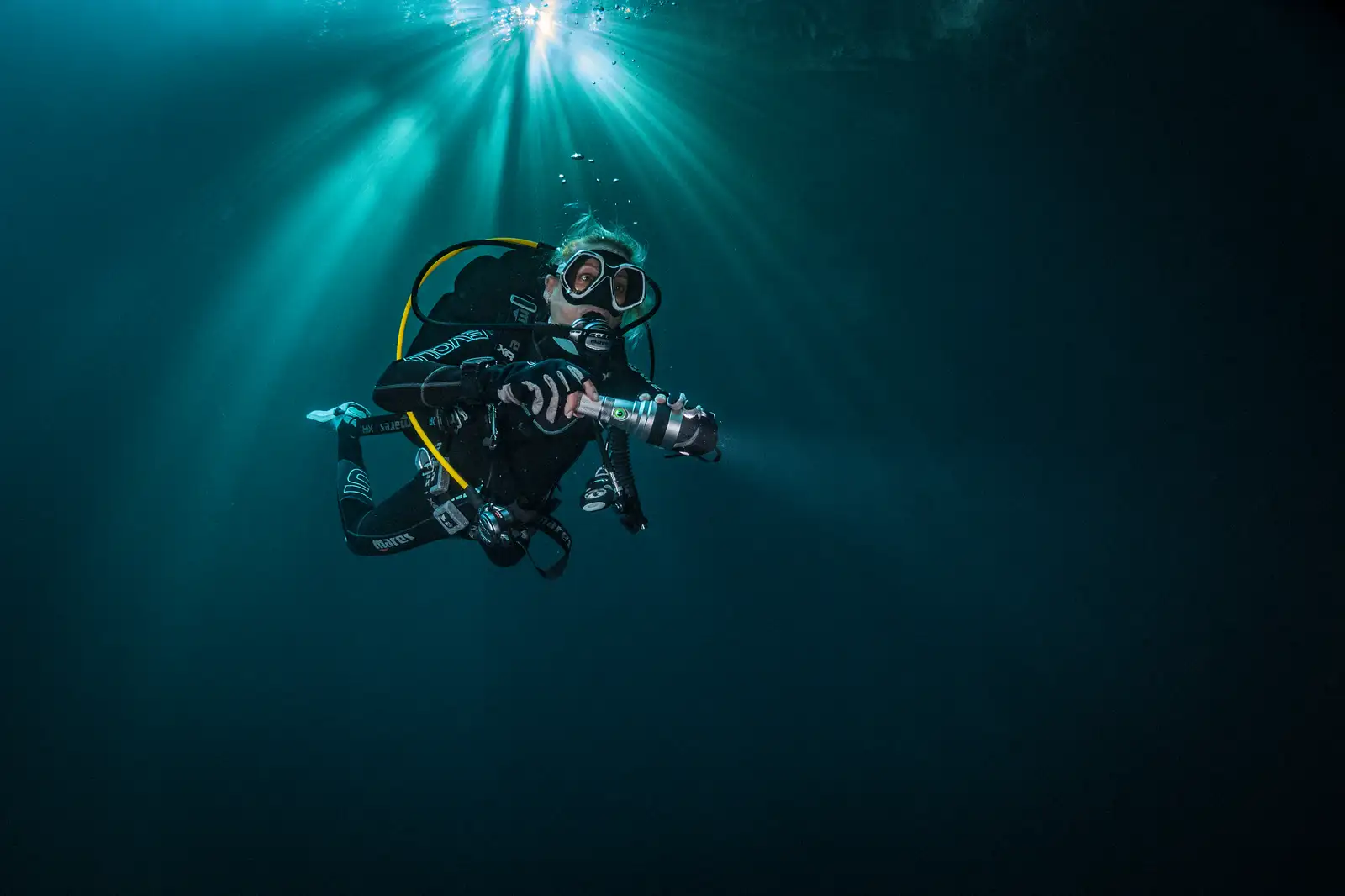
Deep diving between 18 and 40 metres does carry some inherent risks — but with proper training and preparation, these are well understood and manageable.
Decompression sickness occurs when the body is exposed to a sudden drop in pressure, causing gas bubbles to form in the blood and tissues. These bubbles can affect any part of the body — the lungs, heart, skin, joints, or brain — and typically happen when a diver ascends to the surface too quickly. The risk is present for recreational divers down to 40 metres, immediate medical attention is essential if it occurs.
Nitrogen narcosis is a reversible, altered state of consciousness that can occur at depth, caused by nitrogen's anaesthetic effect under higher pressure. Nitrogen makes up about 79% of the air we breathe and is harmless at normal atmospheric pressure — but as pressure increases with depth, it can bring on a drunk-like state, impaired judgement, and even hallucinations. It typically starts affecting divers between 80 and 120 feet, though tolerance varies from person to person.
As you dive deeper, the air you breathe becomes denser, which increases airway resistance and the effort it takes to breathe — reducing your overall breathing capacity the further down you go.
Other risks to be aware of include gas depletion, increased gas consumption, and CO2 narcosis.
Explore Other Specialties
Deep diving is just one of several specialty courses we offer beyond the core certification path. My personal recommendation would be to pair it with Night Diving — the two build very different skills, and together they open up a lot more of what's underwater. Take a look at our full range of speciality courses to find what interests you next.
FAQs
You need to hold an Open Water Diver certification to join the Deep Diving Speciality course. Having at least 8 logged dives beforehand is recommended, though not mandatory — it just helps you feel more comfortable and confident once you're at depth.
We recommend at least 8 logged dives before starting, though it's not a strict requirement. More experience underwater generally means better buoyancy control and air management, both of which matter more at deep-diving depths.
Deep diving does carry specific risks — like decompression sickness and nitrogen narcosis — that don't apply to shallower dives. With proper training, a solid dive plan, and an instructor watching your ascent and gas use closely, these risks are well managed and the course is designed to teach you exactly how.
Deep dive sites like Dickson's Pinnacles and Johnny's Gorge open up marine life and terrain you won't find in shallower water — bigger pelagic species, dramatic underwater topography, and a different, quieter feel than a typical reef dive.
Diving to these depths puts noticeably more pressure on the body than standard recreational diving, so we've set a higher age requirement here than we do for our other specialty courses. It's a deliberate call made for safety, not an oversight.
Ready to Discover the Depths?
Join the SSI Deep Diving Speciality on Havelock Island and explore Dickson's Pinnacles and Johnny's Gorge — dramatic underwater terrain, bigger marine life, and a new depth limit waiting at 40 metres.