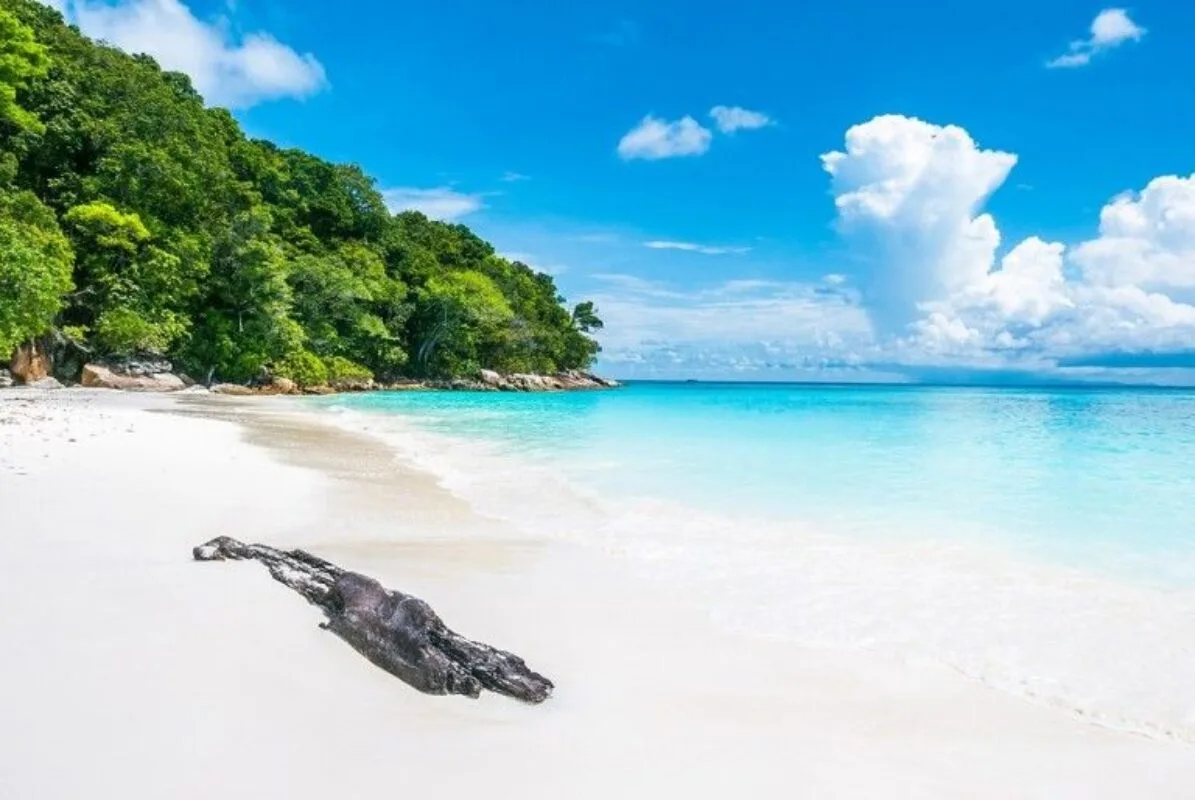
Turtle Beach — Staghorn Coral Garden at Havelock Island (Swaraj Dweep)
Turtle Beach sits farther out than any other Havelock training site — roughly 19km southwest of Havelock's main training point — and that distance is exactly what makes it special. Its staghorn coral garden, covering around 80% of the reef surface, is among the most intact in the Andamans, protected by fewer boats, no anchor damage, and far lower visitor numbers than Havelock's main sites see.
The reef lies close to the shoreline of Turtle Beach itself, reached by a 30-minute boat ride from Beach-03, Govind Nagar (Training point). Below the waterline it's one of the healthiest reefs on Havelock — preserved by responsible diving practices, and home to both green and hawksbill sea turtles who give the beach its name.



Overview of Turtle Beach (Quick Facts)
About Turtle Beach Dive Site
Approximately 80% of Turtle Beach's reef surface is covered by a staghorn coral garden. Staghorn coral (Acropora) grows in dense branching formations that in good light appear almost golden, the branches extending upward and outward in interlocking clusters that give the reef the look of an underwater forest.
The density and health of the Turtle Beach garden reflect the reef's protected character: fewer boats, no anchor damage (moorings are used), and significantly lower visitor numbers than Havelock's main sites have allowed this reef to maintain a coverage that many other Andaman sites have lost.
Alongside the dominant staghorn formations, fan coral, table coral, brain coral, valley coral, mushroom coral, cauliflower coral, and sea anemone coral occupy different depth zones and surfaces across the reef. The variety from the coral-dense shallows to the sandy bottom sections gives the dive a naturally varied character even within a single site.
Topography
Turtle Beach is a fringing reef, running parallel and close to the shoreline rather than as a separate patch or pinnacle. The reef has a wide depth range depending on which section is dived: the staghorn coral garden sits in the shallower zone (roughly 2–8m), while the sandy bottom with stingrays and the deeper reef edges extend to 15m or beyond, with the reef's overall range running 2–18 metres.
Best Time to Dive
Turtle Beach's main season runs from October to May, with slots from 5:30am to 11:30am, offering the most consistently calm conditions and visibility of 15–25 metres. The site's sheltered position means it remains diveable as the monsoon winds down. Current stays very low to mild throughout the year, making Turtle Beach genuinely accessible to all diver levels in all conditions. Water temperature stays 26–29°C year-round.
Marine Life at Turtle Beach
In the shallower sections of the reef, large humphead fish are commonly encountered moving in groups through the staghorn garden at 3–8 metres. Clownfish occupy sea anemones throughout the shallow reef, while butterflyfish, angelfish, sweetlips, and bannerfish are constant presences. Schools of snapper, trevally, rabbitfish, and parrotfish fill the mid-water, and giant groupers hold positions near the larger coral formations.
The white sandy bottom at 11–18 metres is stingray territory — blue-spotted stingrays rest in the open sand, partially buried, until a diver moves too close. Sea stars are scattered across the sand throughout this zone, and lobsters and octopuses occupy the rocky crevices at the reef's deeper edge. Sea turtles, both green and hawksbill, are sighted occasionally rather than regularly, resting on the reef or gliding through open water. Manta rays are an occasional open-water visitor above the outer reef edge — worth watching for, but not guaranteed.
Cost & What's Included
Included:
- Full scuba equipment (tank, regulator, BCD, wetsuit, fins, mask, booties, weight belt, SPG)
- Certified SSI dive guide throughout (1:1 for non-certified divers/non-swimmers)
Bring yourself:
- Certification card if certified (digital is fine)
- Swimsuit to wear under the wetsuit
- Small towel
- Reef-safe sunscreen
- Optional extras: underwater camera, surface marker buoy, rash guard, dive computer, underwater torch, dive knife
Getting There
Turtle Beach reef is easily reached by a 30-minute speedboat ride from Beach-03, Govind Nagar (Training point), or a short walk from Elephant Beach. We offer complimentary pickup and drop-off within a 5km radius of our dive shop.
Emergency & Safety Information
DAN Global Emergency: +1-919-684-9111
FAQs
Turtle Beach genuinely receives far fewer divers than Nemo Reef, Tribe Gate, or Elephant Beach, specifically because the additional journey filters out casual visitors. While Nemo Reef can have multiple dive operators and dozens of divers in the water simultaneously on peak season days, Turtle Beach is often dived with just a few boats — on many days, you have the reef largely to yourself. The lower visitor pressure has a direct effect on coral health: Turtle Beach's remoteness has protected it, and the result is a staghorn coral garden covering approximately 80% of the reef surface, one of the most intact coral environments accessible to recreational divers in the Andamans.
Approximately 80% of Turtle Beach's reef surface is covered by living staghorn coral. At most recreational dive sites in the Andamans, coral coverage has declined over the years due to bleaching events, anchor damage, fin contact, and general diver disturbance. At Turtle Beach, the combination of lower visitor numbers, responsible mooring practices (boats moor to fixed buoys rather than anchoring), and the site's remote position has allowed the coral to maintain a density that most other sites have lost.
Sea turtles are a genuinely occasional presence at Turtle Beach rather than a guaranteed sighting. Both green turtles and hawksbill turtles are seen here depending on your luck on the day. The site's intact reef and low visitor pressure create favourable conditions for turtles that have been disturbed from busier reefs. They're encountered resting on the coral in the shallower sections, feeding in the staghorn garden, and gliding through open water between reef sections.
The macro species here include nudibranchs scattered across the coral surface, pipefish hovering alongside coral stems, shrimps in crevices, and the behavioural interactions between clownfish and their anemones. The sandy bottom sections offer a different macro environment, including small crabs, blue-spotted stingrays, and lobsters in the deeper rocky sections.
Certified divers (Open Water or above) pay INR 3,500 + 18% GST per person. Non-certified divers and non-swimmers pay INR 6,000 + 18% GST per person.
Your dive includes a scuba tank, weight belt, regulator, submersible pressure gauge, buoyancy compensator, wetsuit, mask, fins, and booties. Bring your own swimwear to wear under the wetsuit, a small towel, and reef-safe sunscreen. An underwater camera, surface marker buoy, rash guard, dive computer, underwater torch, and dive knife are optional extras worth carrying if you have them.
Ready to Dive Turtle Beach?
An 80% staghorn coral garden, far fewer divers than Havelock's main sites, and a genuine chance of a sea turtle encounter — one of the Andamans' best-protected reefs.