The Wall — Havelock's First Dive Site at Havelock Island (Swaraj Dweep)
In 2004, when recreational diving on Havelock Island was just beginning, The Wall was the first dive site discovered in these waters. It remains the most iconic, most storied, and most-dived deep site on the island. Located 5km northwest of Havelock in the shipping channel between Havelock and Peel Island, directly in front of the Havelock Lighthouse, The Wall is an underwater rock formation whose western face drops near-vertically from the ridge at 10–12 metres to a sandy channel bottom at 55 metres.
The most famous animal at The Wall is a Napoleon wrasse who has been a resident at this site for years and is documented by name across Havelock's diving community — a large, distinctive fish, growing to well over a metre in length with a pronounced hump on the forehead, bright blue-green scaling, and an unhurried, almost proprietorial way of moving through the water.



Overview of The Wall (Quick Facts)
About The Wall Dive Site
The wall face extends approximately 80 metres horizontally and is covered from top to base in dense purple soft coral. No other reef in the area has this purple colouration, and first-time visitors are surprised to see the colour saturation of the wall face as they descend past the ridge for the first time. The reef accommodates every certification level: OW certified divers explore the ridge at 10–18m; Advanced certified divers descend the wall face to 30m; Deep Specialty certified divers can go to 40m.
The site is a 15–20 minute speedboat ride from Govind Nagar (Beach No. 3).
Topography
The Wall is a large, isolated underwater rock formation sitting in the middle of the channel, rising from the channel floor as an independent structure. Its most defining feature is a near-vertical western face that drops sharply from the ridge at the top to the channel bottom far below — the characteristic that gives the site its name. Divers descend to a ridge that lies between 10–12 metres below the surface, a mix of coral rocks and sandy beds. From the ridge, the western face drops away nearly vertically to 55 metres. The horizontal extent of the wall face is approximately 80 metres from end to end, making it a substantial underwater structure, not a small outcrop.
Best Time to Dive
The Wall is best diveable between October and May, when underwater visibility ranges from 15 to 20 metres, weather is pleasant, and sea conditions are calm, clear, and best for diving. For marine life specifically, the 5:30am slot is consistently better — morning tidal movement concentrates fusilier schools and attracts hunting trevally and barracuda, creating the conditions for cleaning-station activity on the wall face.
Marine Life at The Wall
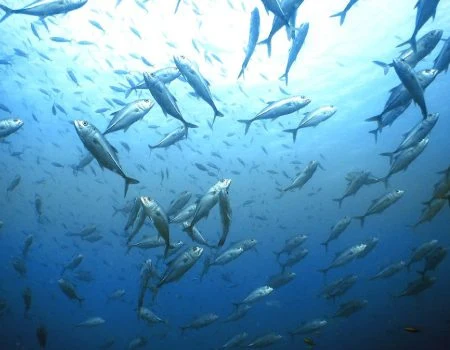
Past the ridge at 10–12 metres, the wall face drops away. Dense purple soft corals cover the vertical surface from the ridge to the deeper sections. Dark caves (12–20m) appear at intervals in the lower wall sections, sheltering moray eels that extend their heads into open water. In the open water column above and beside the wall face, fusilier schools drift in the current.
In the mid-wall (20–30m), cleaning stations on the wall surface bring larger animals in — turtles, rays, and occasionally whitetip reef sharks hover motionless while shrimps move across them. Giant groupers hold position in the mid-water throughout this zone, and dogtooth tuna and larger barracuda appear here in the open water column. The deep wall (30–40m) is suitable for Deep Specialty-certified divers; the wall extends beyond 30 metres into a section that sees fewer divers and correspondingly more undisturbed marine life. The rock face remains near-vertical, but the wall character changes slightly, and cave sections are more frequent. Whitetip reef sharks are more reliably encountered in this deeper zone, cruising the wall face and the sandy channel sections below.
Cost & What's Included
Included:
- Full scuba equipment (tank, regulator, BCD, wetsuit, fins, mask, booties, weight belt, SPG)
- Certified SSI dive guide throughout
Bring yourself:
- Certification card (digital is fine)
- Swimsuit to wear under the wetsuit
- Small towel
- Reef-safe sunscreen
- Optional extras: underwater camera, surface marker buoy, rash guard, dive computer, UV torch
Getting There
The Wall dive reef lies 5km northwest of Beach-03, Govind Nagar, in the shipping channel between Havelock and Peel Island, and is accessible by a 15–20 minute boat ride. We offer complimentary pickup and drop-off within a 5km radius of our dive shop.
Emergency & Safety Information
DAN Global Emergency: +1-919-684-9111
FAQs
The sharks at The Wall are whitetip reef sharks, one of the least aggressive shark species in the ocean. They are slender, moderately sized sharks (adults typically 1.2-1.6 metres) with the distinctive white tips on the dorsal and caudal fins that give them their name. They are not in the same threat category as bull sharks, oceanic whitetips, or tiger sharks.
The 5:30am slot is consistently better for marine life activity at The Wall. The reasons are specific to the biology and tidal dynamics of the site: morning tidal movement is most active in the early hours, and the current that flows over the wall face at this time is what concentrates the fusilier schools, attracts hunting trevally and barracuda, and creates the conditions for cleaning station activity on the wall face.
December to March is octopus mating season at The Wall, and the difference in octopus sightings and behaviour during this period relative to the rest of the year is significant. During mating season, they move into open water for courtship and hunting. Males display dramatic colour changes to attract females. Mating pairs are visible in the open, sometimes for extended periods.
Yes — The Wall is genuinely rewarding for OW-certified divers, who dive the ridge section at 10-18 metres. The ridge itself has abundant macro life (scorpionfish, lobsters, cuttlefish, octopuses, and more). Most OW divers describe the sight of the wall dropping away below them from the ridge as one of the most memorable moments of their Havelock diving experience.
Certified divers (Open Water or above) pay INR 3,500 + 18% GST per person.
Your dive includes a scuba tank, weight belt, regulator, submersible pressure gauge, buoyancy compensator, wetsuit, mask, and booties. Bring your own swimwear to wear under the wetsuit, a small towel, and reef-safe sunscreen. An underwater camera, surface marker buoy, rash guard, dive computer, and UV torch are optional extras worth carrying if you have them.
Ready to Dive The Wall?
Havelock's first-ever dive site — a wall of purple soft coral dropping to 55 metres, home to a resident Napoleon wrasse.