Scuba Diving at Cinque Island, Port Blair
Cinque Island is a small, uninhabited sanctuary 26km southwest of Port Blair, reachable only by private charter boat from Chidiyatapu. Part of the Mahatma Gandhi Marine National Park and a declared wildlife sanctuary since 1987, daily access is capped at 372 visitors to protect its reef systems — making it one of the least disturbed dive environments in the Andaman archipelago, with visibility reaching up to 24 metres.
A striking narrow sandbar connects North and South Cinque Island, one of the most photographed sights in the Andamans. North Cinque is the primary diving and snorkelling site, where the reef begins at 4 metres and drops through coral gardens, massive boulder formations, and a natural swim-channel before reaching a 25-metre sea wall — suitable for divers at every level, from first-timers to advanced explorers.


Overview of Cinque Island (Quick Facts)
About Cinque Island Dive Site
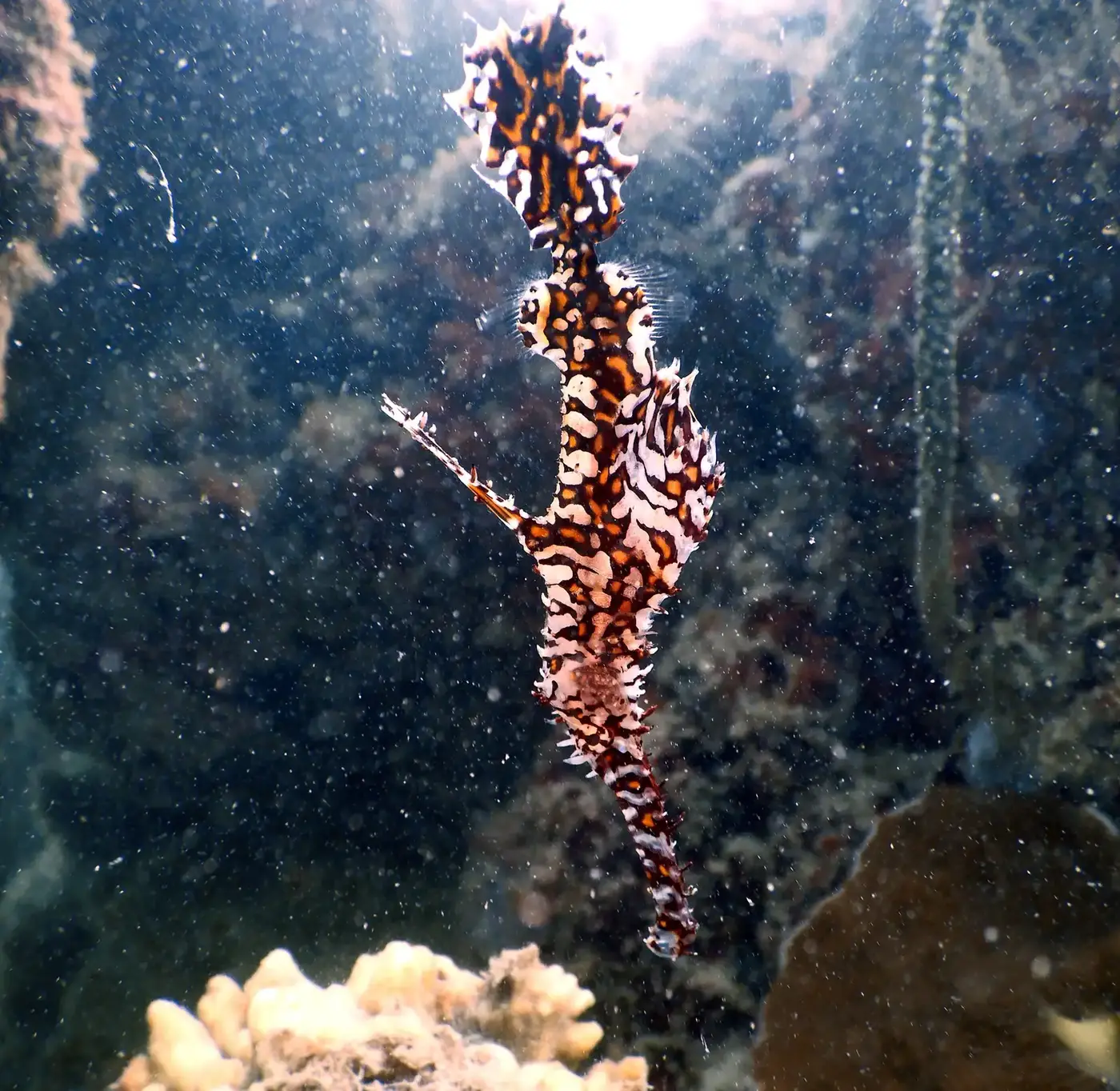
The deeper sections of the Cinque Island reef wall are home to black coral formations — one of the most unusual and rarely encountered coral types in recreational diving. Branch-tree-like structures, black corals (Antipatharia) thrive where light is minimal and water flow is consistent, on the lower wall face at 15–25 metres.
They appear almost architectural against the rock wall — darker and more angular than the soft corals and brain corals of the shallower sections of the reef. Encountering them at the base of the wall, with the reef rising above and open ocean below, is one of Cinque Island's most memorable visual moments.
Topography
The reef at North Cinque Island is one of the most varied in topography of any Andaman dive site. Shallow coral gardens at 4–10 metres give way to a series of massive boulders, some the size of small houses, creating natural channels, crevices, and swim-through passages filled with reef life.
Below the boulders, the sea wall begins — a near-vertical drop from 10 metres down to 25 metres of open water. This part of the reef is covered in coral growth, sea fans, and black coral formations that begin to appear at depth. The combination of three distinct environments in a single dive — coral garden, boulder field, and open wall — is rare at any other site in the Andamans.
Best Time to Dive
The diving season at Cinque Island runs from October to May. November to April is peak season, with the calmest seas, most consistent visibility, and the highest chance of large-species sightings. Water temperature stays between 26–29°C throughout the year. Currents are mild in the shallower sections near the sandbar and can be moderate near the outer wall.
Marine Life at Cinque Island
The reef's isolation and protected status make it exceptionally rich in marine life density. Sea anemones host clownfish throughout the shallower sections. Butterflyfish, rabbitfish, and parrotfish are constant presences in the coral gardens. Jellyfish drift through the mid-water on certain visits, and needlefish patrol the surface near the sandbar. Sea urchins, starfish, and sea cucumbers populate the reef floor between the boulder formations.
Green sea turtles are reliably spotted resting on the reef or gliding through the shallower sections near the sandbar. Reef sharks are possible near the deeper wall sections and outer reef, more likely in the early morning hours when they're most active. Dolphins are most commonly encountered during the boat transit to and from the island rather than on the dive itself.
Cost & What's Included
Included:
- Full scuba equipment (tank, regulator, BCD, wetsuit, fins, mask, booties, weight belt, SPG)
- Certified SSI dive guide throughout (1:1 for non-certified divers/non-swimmers)
Bring yourself:
- Certification card if certified (digital is fine)
- Swimsuit to wear under the wetsuit
- Small towel
- Reef-safe sunscreen
Getting There
Cinque Island is located 26km (14 nautical miles) southwest of Port Blair. There are no scheduled ferry services — access is only by private charter boat operated by tour operators registered with the Forest Department. The correct route is: Port Blair to Chidiyatapu by road (approximately 1 hour by taxi or bus), followed by a private charter boat from Chidiyatapu jetty to Cinque Island, which takes approximately 1.5–2 hours depending on sea conditions.
Emergency & Safety Information
DAN Global Emergency: +1-919-684-9111
FAQs
Yes — a Forest Department permit is mandatory for all visitors to Cinque Island. The island is part of the Mahatma Gandhi Marine National Park and has been a declared wildlife sanctuary since 1987. Daily visitor access is capped at 372 people to protect the reef ecosystems, and no one is allowed on the island without this permit, regardless of how they arrive.
Cinque Island has something for divers of every level, but different sections suit different certifications. The shallow coral gardens near the sandbar at 4–10 metres are suitable for non-certified beginners and non-swimmers diving with a personal instructor — calm conditions, excellent visibility, good marine life, and manageable depth make this section accessible to first-timers. The boulder field (10–18m) suits Open Water certified divers comfortably. The deeper sea wall sections (18–25m), where the black coral formations are found, require either Advanced Open Water certification or diving under direct professional instructor supervision.
Cinque Island was declared a wildlife sanctuary in 1987 specifically to protect its biodiversity — coral reefs, endemic birds, mangrove systems, and marine ecosystems. Access is capped at 372 visitors per day and requires a Forest Department permit because unchecked visitor numbers cause measurable damage to reef systems. The island is deliberately left uninhabited — no hotels, no permanent facilities, and no waste disposal. Visitors are required to carry all waste off the island before departure. The following are strictly prohibited at Cinque Island: touching, feeding, or disturbing any marine life; collecting shells, corals, or any natural objects; fishing of any kind; littering or lighting fires. All diving and snorkelling must be conducted in designated areas with proper supervision.
Black corals (scientific name: Antipatharia) are one of the most unusual coral formations in recreational diving globally. They look like dark, branching, tree-like structures that grow on the vertical sections of reef walls in deeper, lower-light zones. At Cinque Island, the black coral formations are found on the lower sections of the sea wall at approximately 15–25 metres depth.
The diving season at Cinque Island runs from October to May, with November to April as peak season — calmest seas, most consistent visibility, and the highest chance of large-species sightings. Water temperature stays between 26–29°C throughout the year. Currents are mild in the shallower sections near the sandbar and can be moderate near the outer wall.
Your dive includes a scuba tank, regulator, buoyancy compensator (BCD), wetsuit, fins, mask, booties, weight belt, and submersible pressure gauge. Bring your own swimwear to wear under the wetsuit, a towel, and reef-safe sunscreen for the boat transit.
Ready to Dive Cinque Island?
Coral gardens, a boulder field, and black corals on the wall — one of the most protected, least-disturbed reefs in the Andamans.