Scuba Diving at Bala Reef, Little Andaman
Bala Reef is not a convenient day dive. It requires a 6–8 hour government ferry from Port Blair to Little Andaman — a journey that filters out casual visitors and delivers you to one of the least-dived, most pristine barrier reef systems in the Andaman Islands. Little Andaman is deliberately underdeveloped: limited tourist infrastructure, few competing dive operators, and a reef that experiences a fraction of the diver pressure of Havelock or Port Blair sites.
For divers who want to see what the Andaman Islands looked like before mass tourism arrived, the journey to Bala Reef is the point.



Overview of Bala Reef (Quick Facts)
About Bala Reef Dive Site
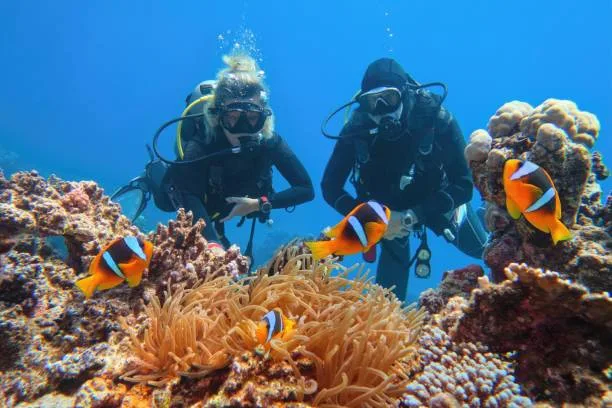
Bala Reef is an outstanding coral reef distinctively located on the western coast of Little Andaman. It can be accessed in daytime by a 6–8 hour ferry ride from Port Blair. The reef hosts a rich variety of marine life at different depths, suitable for all kinds of divers — beginners, open water divers, and advanced or deep divers — who can explore different parts of the reef based on their skill and certification level.
Topography
The reef itself is vast. At 4.5 km², Bala Reef is a long barrier reef system and one of the largest exploration areas of any accessible dive site in the entire Andaman archipelago. The reef offers multiple distinct dive sites across its length, different depth profiles from 4 to 20 metres, and a species list that includes whitetip reef sharks, manta rays, eagle rays, Napoleon wrasse, garden eels, and giant groupers alongside the dense reef fish community of the shallower sections.
Best Time to Dive
The best time to dive Bala Reef is November to April, when the Bay of Bengal is calm and visibility opens to 15–25 metres across the reef. Water temperature stays 27–29°C throughout the season.
Marine Life at Bala Reef
The shallower sections (4–10 m) support a rich ecosystem: clownfish among sea anemones, schools of snappers and fusiliers, bannerfish, butterflyfish, rabbitfish, Kuhl stingrays resting in sandy patches, and yellow-spotted sweetlips. Sea anemones are abundant throughout the shallow zone, and the Kuhl stingray, with its distinctive spotted markings, is one of the more striking species in this section.
The deeper sections of the barrier reef (15–20 m) are where Bala Reef earns its reputation among experienced divers. Whitetip reef sharks cruise the outer reef edge, manta rays and eagle rays are periodically encountered in the open water sections beyond the reef face, Napoleon wrasse is reliably sighted here, barracuda hunt in loose formations in the mid-water, and giant groupers occupy the larger coral structures throughout.
Cost & What's Included
Included:
- Full scuba equipment (tank, regulator, BCD, wetsuit, fins, mask, booties, weight belt, SPG)
- Certified SSI dive guide throughout (1:1 for non-certified divers/non-swimmers)
Bring yourself:
- Certification card if certified (digital is fine)
- Swimsuit to wear under the wetsuit
- Small towel
- Reef-safe sunscreen
Per-dive price shown above. Since this is not a day trip, budget separately for the Phoenix Bay Jetty ferry ticket and at least one overnight stay on Little Andaman — contact us for help planning the full trip.
Getting There
Little Andaman (Bala Reef) is approximately 110 kilometres from Port Blair, accessed by government ferries that ply the route from Phoenix Bay Jetty daily. The journey takes approximately 6–8 hours one way, depending on sea conditions and the vessel. Divers will need at least one overnight stay at Hut Bay, Little Andaman, to dive Bala Reef.
Emergency & Safety Information
DAN Global Emergency: +1-919-684-9111
Given the 6–8 hour ferry distance from Port Blair, dive planning at Bala Reef is deliberately conservative — your instructor will brief you on this before every dive.
FAQs
Yes — Bala Reef is not a day trip. The government ferry from Port Blair to Little Andaman departs from Phoenix Bay Jetty and takes approximately 6–8 hours one way, depending on sea conditions and the specific vessel. This means the minimum commitment for a Bala Reef dive is at least one overnight stay on Little Andaman, and in practice, 2–3 nights are strongly recommended to justify the journey and allow time for multiple dives across different sections of the 4.5 km² reef.
Little Andaman is one of the least visited and least developed islands in the entire Andaman archipelago — minimal tourist infrastructure, a fraction of the diver numbers that visit Havelock or Port Blair sites, and a reef that has not experienced the sustained diver pressure that degrades coral and displaces marine life at more popular locations. The result is a reef in noticeably better condition, with marine life that is less habituated to divers and more naturally active.
Whitetip reef sharks and manta rays are genuinely possible at Bala Reef rather than rare sightings, but they are not guaranteed sightings on every dive. Whitetip reef sharks are most commonly encountered near the outer reef face and in deeper sections (15–20 m), typically during early-morning dives when they are most active. Multiple dives across different days and sections of the reef significantly increase the probability of a sighting compared to a single dive.
Bala Reef has something for divers of all certification levels, but different sections of the reef suit different experience levels. The shallow inner reef sections (4–10 m) are calm, clear, and suitable for non-certified beginners and non-swimmer divers diving with a personal instructor. The intermediate sections of the coral garden (10–15 m) are appropriate for Open Water certified divers with good buoyancy. The outer reef wall (15–20 m) and the deeper sections are recommended for Advanced Open Water certified divers accompanied by a professional instructor.
The best time to dive Bala Reef is November to April, when the Bay of Bengal is calm and visibility opens to 15–25 metres across the reef. Water temperature stays 27–29°C throughout the season.
Ready to Dive Bala Reef?
One of the least-dived, most pristine barrier reefs in the Andamans — whitetip sharks, manta rays, and a 4.5km² reef almost entirely to yourself.